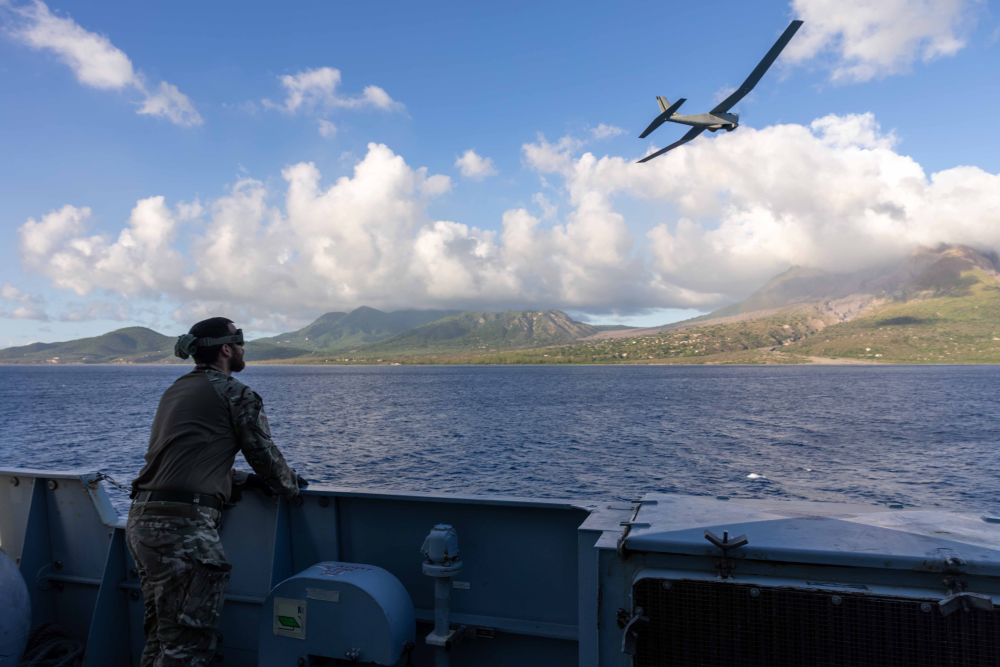
More than three decades after the Soufrière Hills Volcano transformed Montserrat forever, scientists say the volcano remains active beneath the surface, continuing to shape both the island’s risks and its future opportunities.
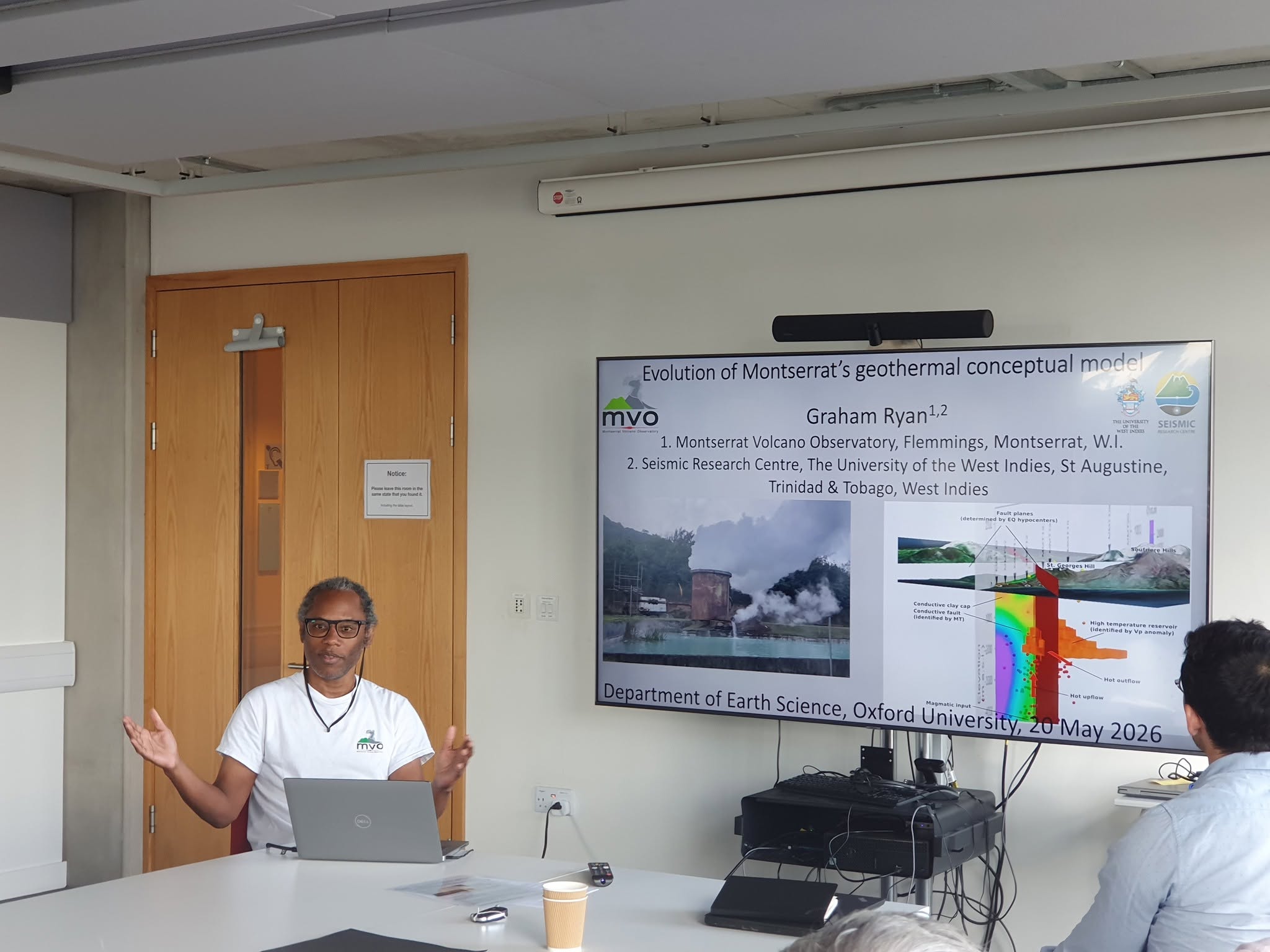
Speaking during a presentation at the Oxford Martin School in the United Kingdom, Montserrat Volcano Observatory Director Dr Graham Ryan said that while the volcano has not erupted since 2010, monitoring data shows it remains in a state of unrest and continues to require close observation.
“The monitoring data is still showing significant levels of unrest,” Ryan explained, noting that scientists continue to detect ground inflation, volcanic gas emissions and increased seismic activity beneath the island.
A Disaster That Changed Montserrat
Ryan reflected on how dramatically life changed following the start of volcanic activity in July 1995.
Before the eruption, Montserrat was home to approximately 10,500 people and had built a diverse economy around residential tourism, the American University of the Caribbean medical school and the world-famous AIR Studios recording complex established by Sir George Martin.
The eruption came just six years after Hurricane Hugo devastated the island in 1989, damaging more than 90 percent of buildings and killing ten people. Despite a strong rebuilding effort, much of the reconstruction took place in Plymouth, the area later lost to volcanic activity.
The eruption ultimately forced the evacuation of two-thirds of the island, including Plymouth, and led to a dramatic population decline. Ryan noted that the population fell to around 2,500 people before recovering to approximately 5,000 through migration from elsewhere in the Caribbean.
Nineteen people lost their lives on 25 June 1997 when pyroclastic flows swept through evacuated areas in the east of the island.
Warnings Existed Decades Earlier
One of the most striking parts of Ryan’s presentation was his review of historical records showing that scientists had identified the volcanic threat long before 1995.
Volcanic seismic crises were recorded on Montserrat during the 1890s, 1930s and 1960s. Scientists repeatedly warned that Plymouth was vulnerable to future volcanic activity and recommended that critical infrastructure be developed in safer areas of the north. Hazard maps produced in the 1960s and reports prepared in the 1980s also highlighted the risks.
According to Ryan, those warnings were never fully acted upon and were not effectively communicated to the wider public.
Why Scientists Are Still Watching Closely
Today, the Montserrat Volcano Observatory operates one of the Caribbean’s most sophisticated volcanic monitoring systems.
The observatory uses seismic sensors, GPS stations, thermal cameras, gas monitoring equipment and satellite-supported measurements to track changes beneath the volcano.
Although the volcano has remained quiet for 16 years, scientists continue to observe gradual inflation of the island and significant emissions of sulphur dioxide gas. Earthquake activity has also increased since around 2020.
Based on current assessments, Ryan said scientists estimate a 15.6 percent chance of significant volcanic activity occurring within the next year and approximately a 48 percent chance of renewed activity over the next 30 years.
However, he stressed that Montserrat’s monitoring systems provide a high degree of protection, making the likelihood of a major event occurring without warning extremely low.
Opportunities Created by the Volcano
Despite the risks, Ryan argued that the volcano is also creating opportunities for economic development.
Sand and aggregate generated by volcanic deposits are already being mined and exported for construction. Plymouth has become a unique tourism attraction, drawing visitors interested in seeing the buried capital often described as a modern-day Pompeii. There is also growing interest in expanding agricultural activity within parts of Zone V where risks can be managed.
Ryan also highlighted Montserrat’s ambition to become a UNESCO Global Geopark, a designation that recognises places of international geological significance while promoting education, research, tourism and sustainable development.
Geothermal Energy Could Transform the Island
Perhaps the most promising opportunity lies beneath the ground.
Ryan said geothermal energy has the potential to dramatically reduce electricity costs, which currently average around US$0.50 per kilowatt hour and depend heavily on imported diesel fuel. Montserrat spends approximately US$5.5 million annually on diesel-powered electricity generation.
Exploration wells drilled on the island have already demonstrated enough capacity to generate between one and two megawatts of electricity, close to Montserrat’s normal electricity demand. Estimates suggest the wider geothermal resource could eventually support between 30 and 50 megawatts of generation capacity.
Beyond electricity, geothermal energy could support refrigeration, agricultural processing, drying of produce, manufacturing and tourism ventures such as spa facilities.
Could Volcanoes Produce Valuable Minerals?
Ryan also shared findings from the RESET Project, an international research initiative exploring whether valuable metals contained within volcanic systems can be recovered in environmentally responsible ways.
Researchers have identified promising concentrations of elements including rubidium, cesium and gold within geothermal fluids. Preliminary estimates suggest that, if extraction proves feasible, gold alone could potentially generate around £1 million annually from existing geothermal wells.
The project is also examining the legal, environmental and community implications of any future industry, with Ryan noting that public engagement has been a key component of the research.
Also read: Is There Gold in Montserrat’s Heat? Scientists Say Yes
Balancing Risk and Opportunity
Ryan concluded that Montserrat’s challenge remains the same one it has faced since 1995: balancing volcanic risk with economic opportunity.
“The challenge is to use scientific input to determine the balance between risk, benefit and opportunity,” he said.
While the volcano remains a source of uncertainty, he argued that it also gives Montserrat a unique advantage. From geothermal energy and geological tourism to scientific research and potential mineral extraction, the same forces that reshaped the island may yet help power its future.
Discover more from Discover Montserrat
Subscribe to get the latest posts sent to your email.