
In Why Exercise Alone May Not Be Shifting Your Visceral Fat we encouraged you to reduce your carbohydrates as part of the plan to burn more. But are there such a thing as good carbs in the Caribbean household and how much is too much?
Sweet potato, breadfruit and ground provisions can all form part of a healthy diet. But the way they are prepared, the quantity served and what else is on the plate matter as much as the carbohydrate chosen.
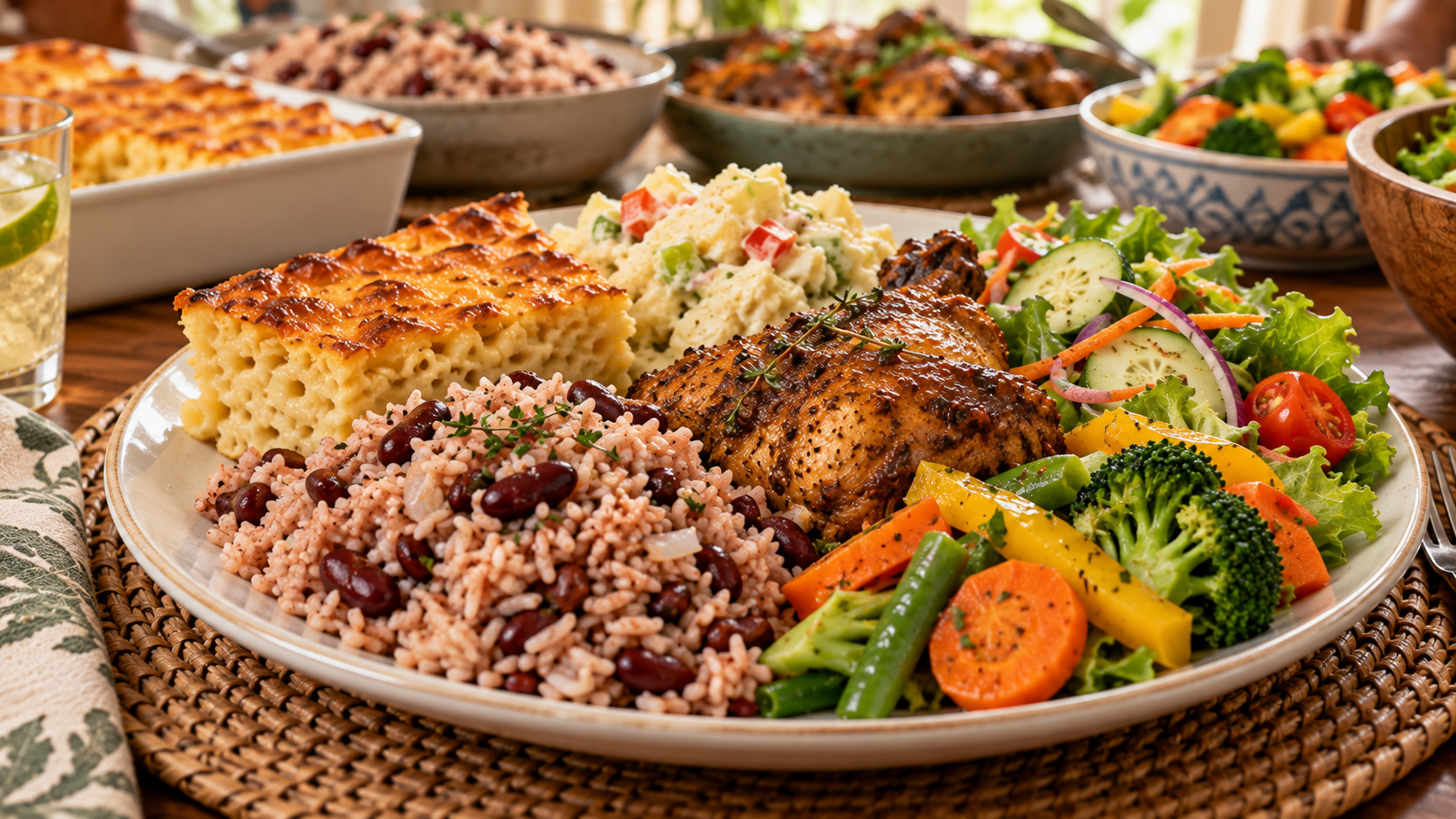
A typical Caribbean Sunday lunch or even a mid week one, may include rice and peas, macaroni pie and potato salad on the same plate. Add chicken, a spoonful of gravy and perhaps a small serving of vegetables squeezed into the remaining space. Nothing on the plate is forbidden. The problem is that three substantial sources of carbohydrate have been combined in one meal, while vegetables may be treated as decoration.
Carbohydrates are not the enemy. They supply glucose, the body’s main source of energy, and many carbohydrate-rich foods also provide fibre, vitamins and minerals. The more useful question is not whether to stop eating carbohydrates, but which ones to choose, how to prepare them and how much to place on the plate.
Not all carbohydrates bring the same benefits
The term carbohydrate covers a wide range of foods, from lentils, oats and sweet potatoes to white bread, cakes and sugar-sweetened drinks.
The body breaks digestible carbohydrates down into glucose, but the speed of digestion and the nutrients delivered alongside that glucose vary considerably.
Whole grains, beans, peas, ground provisions and starchy fruits generally offer more fibre and nutrients than highly refined products. Fibre can help with fullness, bowel health and blood-sugar management. Refined carbohydrates such as white bread, many sweetened cereals and pastries are usually digested more quickly and may be easier to overconsume.
Harvard’s Healthy Eating Plate recommends whole or relatively intact grains because they generally have “a milder effect on blood sugar and insulin” than white bread, white rice and other refined grains.
This does not mean brown rice must replace white rice at every Caribbean table. It means recognising that carbohydrate quality and quantity both matter.
Sweet potato versus white potato
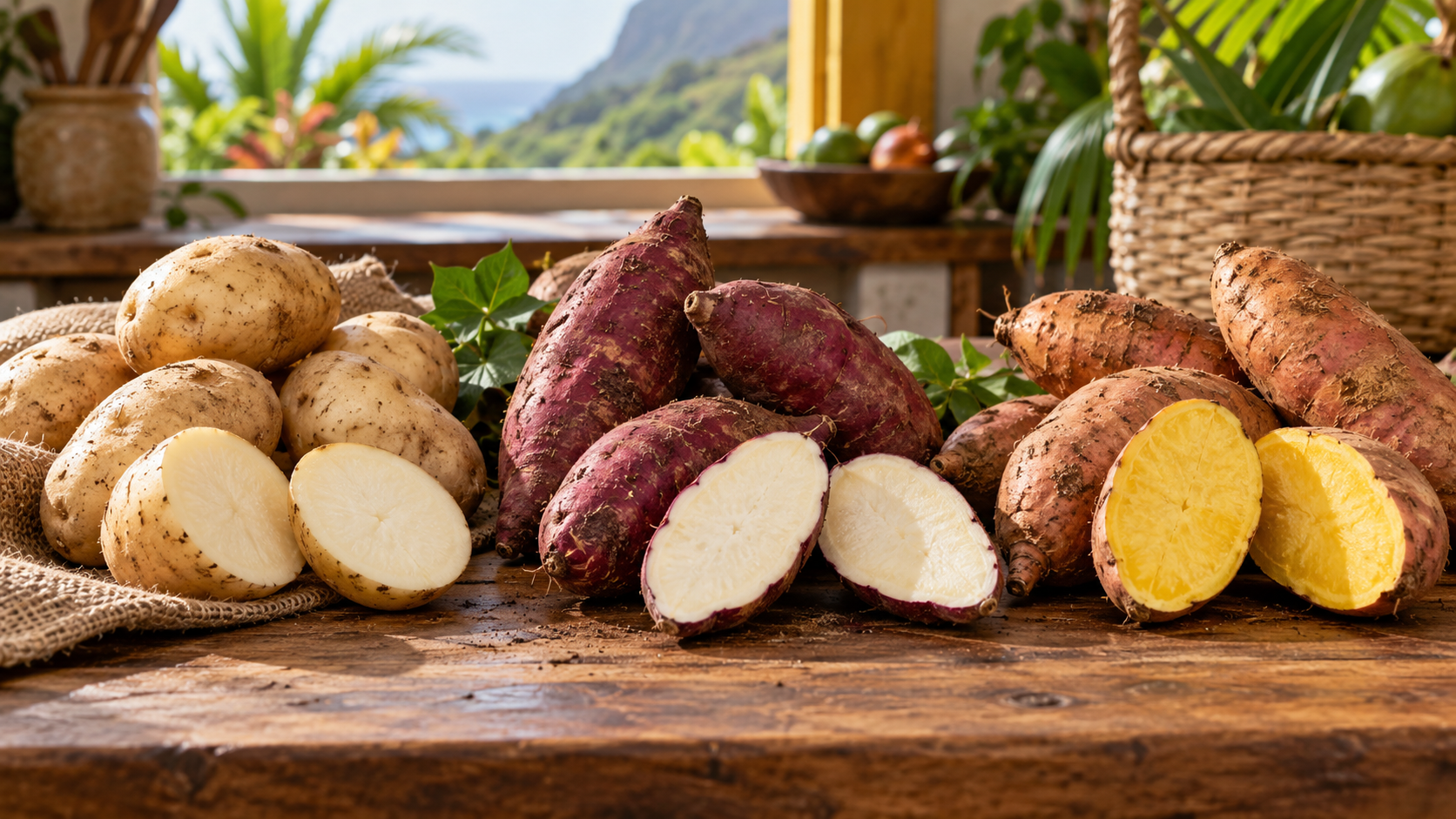
Sweet potato is often presented as the clearly superior choice. It does have advantages, particularly the orange-fleshed varieties, which are rich in beta-carotene. The body converts beta-carotene into vitamin A, which supports vision, immune function and healthy skin.
Sweet potatoes can also have a somewhat lower glycaemic load than white potatoes, depending on the variety and preparation method. That may mean a smaller rise in blood sugar.
But the difference is not large enough to make portion size irrelevant. Harvard’s Nutrition Source cautions that sweet potatoes can still have a high glycaemic index and load, “almost as high as that of a white potato”.
A large helping of mashed sweet potato loaded with butter and sugar is not automatically a better choice than a modest boiled white potato.
White potatoes are not nutritionally empty. They provide potassium, vitamin C and other nutrients, particularly when eaten with the skin. The bigger concerns are often preparation and quantity. Fries, heavily buttered mash and oversized servings change the nutritional profile of the meal.
Choose sweet potato when you enjoy it and want the additional beta-carotene. But do not expect the colour of the potato to cancel out a very large portion.
Is breadfruit a better substitute?
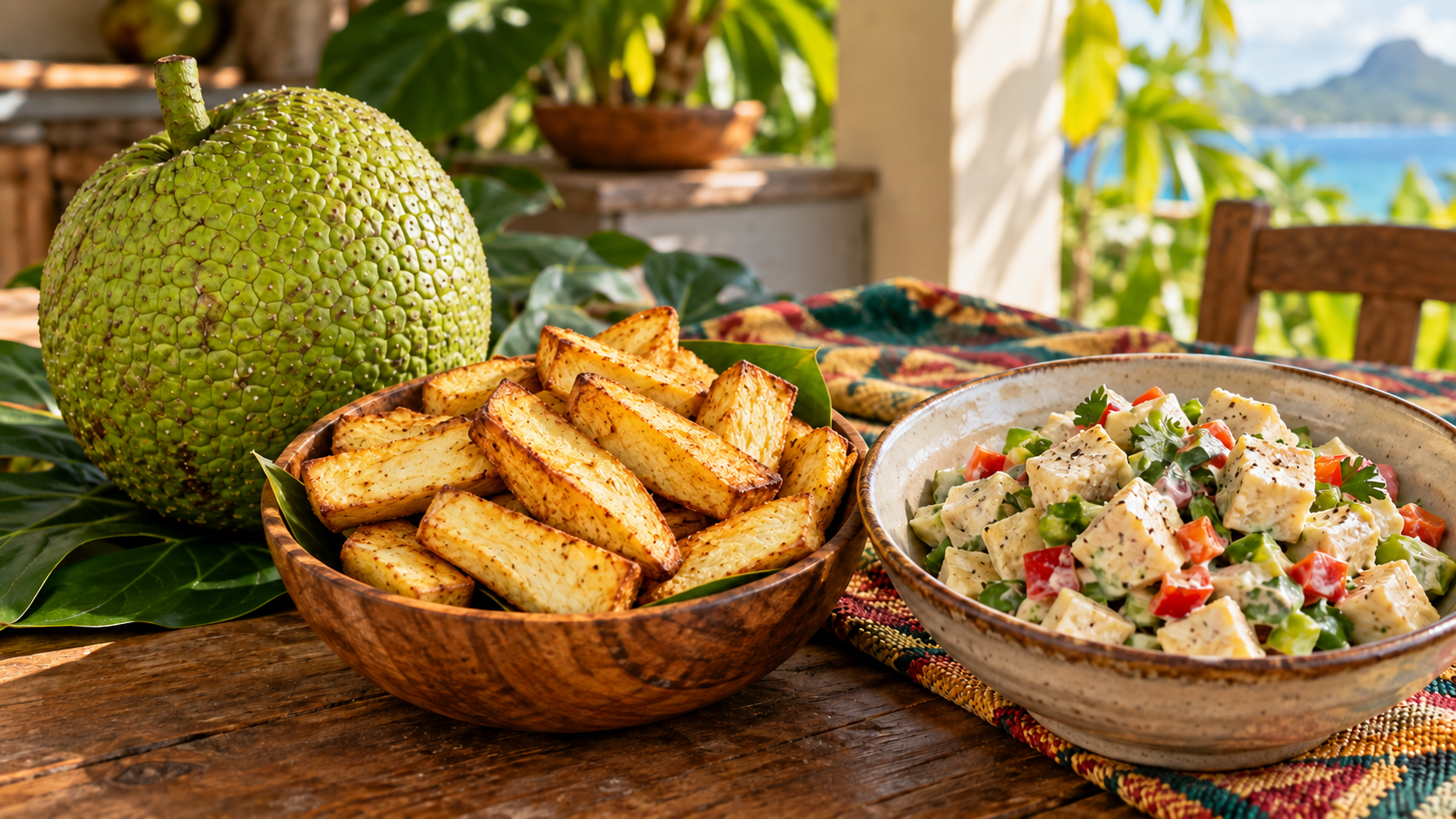
Breadfruit can be an excellent Caribbean carbohydrate, but it is still a starchy food rather than a free vegetable.
It provides carbohydrate and fibre as well as nutrients including potassium, vitamin C and several B vitamins. A scientific review described breadfruit as a source of carbohydrate, dietary fibre and protein, with its precise nutritional content varying according to variety, maturity and processing.
Breadfruit also supports regional food security. It grows locally in many Caribbean islands and can reduce dependence on imported rice, flour and potatoes. The World Food Programme has highlighted the versatility and cultural significance of breadfruit and other traditional Caribbean root crops.
However, breadfruit is not automatically healthier in every form.
Boiled, roasted or air-fried breadfruit can be a useful alternative to white rice, chips or heavily buttered mashed potato. Breadfruit fried in plenty of oil or served with rich sauces will deliver substantially more energy.
The key word is substitute. Adding breadfruit to a plate that already contains rice, macaroni pie and potato salad does not improve the meal’s carbohydrate balance. It becomes a fourth starch.
Our problem may be carbohydrate stacking
Caribbean meals often include several foods from the staples group. These may include:
– Rice
– Pasta
– Bread
– Cornmeal
– Green banana
– Plantain
– Breadfruit
– Yam
– Dasheen
– Eddoes
– Cassava
– Sweet potato
– White potato
These foods can all contribute to a healthy diet. The difficulty arises when several are served in full portions at the same meal.
Rice and peas plus macaroni pie is not simply rice accompanied by a side dish. Both foods contribute a significant amount of carbohydrate. Adding potato salad, plantain or breadfruit increases the total further.
A more balanced plate could contain one principal starch, plenty of vegetables and an appropriate source of protein. If two starches are served because the meal would not feel complete without them, the portion of each should be reduced.
For example, instead of a full scoop of rice and peas alongside a large square of macaroni pie, serve half the usual amount of each. The plate still includes both familiar foods without doubling the intended carbohydrate portion.
Macaroni pie is more than a carbohydrate
Macaroni pie occupies a special place on many Caribbean tables. It is also nutritionally different from plain pasta.
In addition to the carbohydrate in the macaroni, the dish may contain substantial amounts of cheese, full-fat milk, butter and sometimes eggs. These ingredients add protein, but they may also add considerable calories, saturated fat and salt.
Macaroni pie should therefore be treated as a rich side dish rather than an unlimited staple.
A smaller square can be served alongside vegetables and lean protein. The recipe can also be adjusted by using less cheese and butter, adding vegetables or using reduced-fat dairy products. An NHS macaroni cheese recipe reduces the cheese and recommends serving the dish with cooked vegetables or a mixed-leaf salad.
There is no need to remove macaroni pie from celebrations or Sunday lunch. But when it is on the plate, consider whether rice, potato salad and another provision are all needed as well.
Potato salad can be deceptively rich
Potato salad contains potato, but much of its calorie density can come from mayonnaise and other additions.
Potatoes that have been cooked and cooled may contain more resistant starch than potatoes eaten immediately after cooking. Resistant starch is not digested in exactly the same way as ordinary starch. However, this possible advantage does not transform a heavily dressed potato salad into a low-calorie food.
Large quantities of mayonnaise can add significant fat and calories without increasing the volume of food very much.
Use less mayonnaise, combine it with plain yoghurt or choose a lighter dressing. More chopped vegetables, herbs and seasoning can add flavour and texture. Most importantly, serve potato salad as the starch on the plate, not as a vegetable beside two other starches.
What does a reasonable portion look like?
Individual needs vary according to age, body size, activity level, medical conditions and health goals. A physically active person may require more carbohydrate than someone who spends most of the day sitting.
As a visual starting point, a main meal can be arranged so that:
– Around half the plate contains non-starchy vegetables.
– Approximately one quarter contains protein such as fish, chicken, eggs, beans, peas or lentils.
– Approximately one quarter contains rice, pasta, breadfruit or ground provisions.
For a simple hand guide, a cooked starch portion can be roughly the size of a person’s closed fist. Diabetes UK uses a fist-sized sweet potato or jacket potato as a practical portion guide. It describes a serving of cooked rice or pasta as approximately the amount that fits into two cupped hands.
These are guides, not rigid rules. Someone managing diabetes or another medical condition may need individual advice from a registered dietitian or qualified healthcare professional.
Better Caribbean carbohydrate choices
There is no single “best” carbohydrate for every person and every meal. Variety is more useful than searching for one perfect food.
Good options include:
– Boiled or roasted breadfruit
– Boiled green banana
– Sweet potato
– Yam
– Dasheen and eddoes
– Cassava
– Corn
– Oats
– Brown or parboiled rice
– Wholegrain bread and pasta
– Beans, lentils and peas
Beans and peas are particularly valuable because they provide carbohydrate, fibre and plant protein. Rice and peas may therefore offer more nutritional value than plain white rice, although the rice portion and any added coconut milk or fats still count.
Jamaica’s food-based dietary guidelines include corn, tubers, rice and plantain within the staples group. The plate model also includes vegetables, fruit, legumes and nuts, foods from animals, and fats and oils. The size of each section reflects the proportion it should contribute to the overall diet.
Keep the food, change the balance
Healthy eating does not require Caribbean people to abandon the foods they know and love.
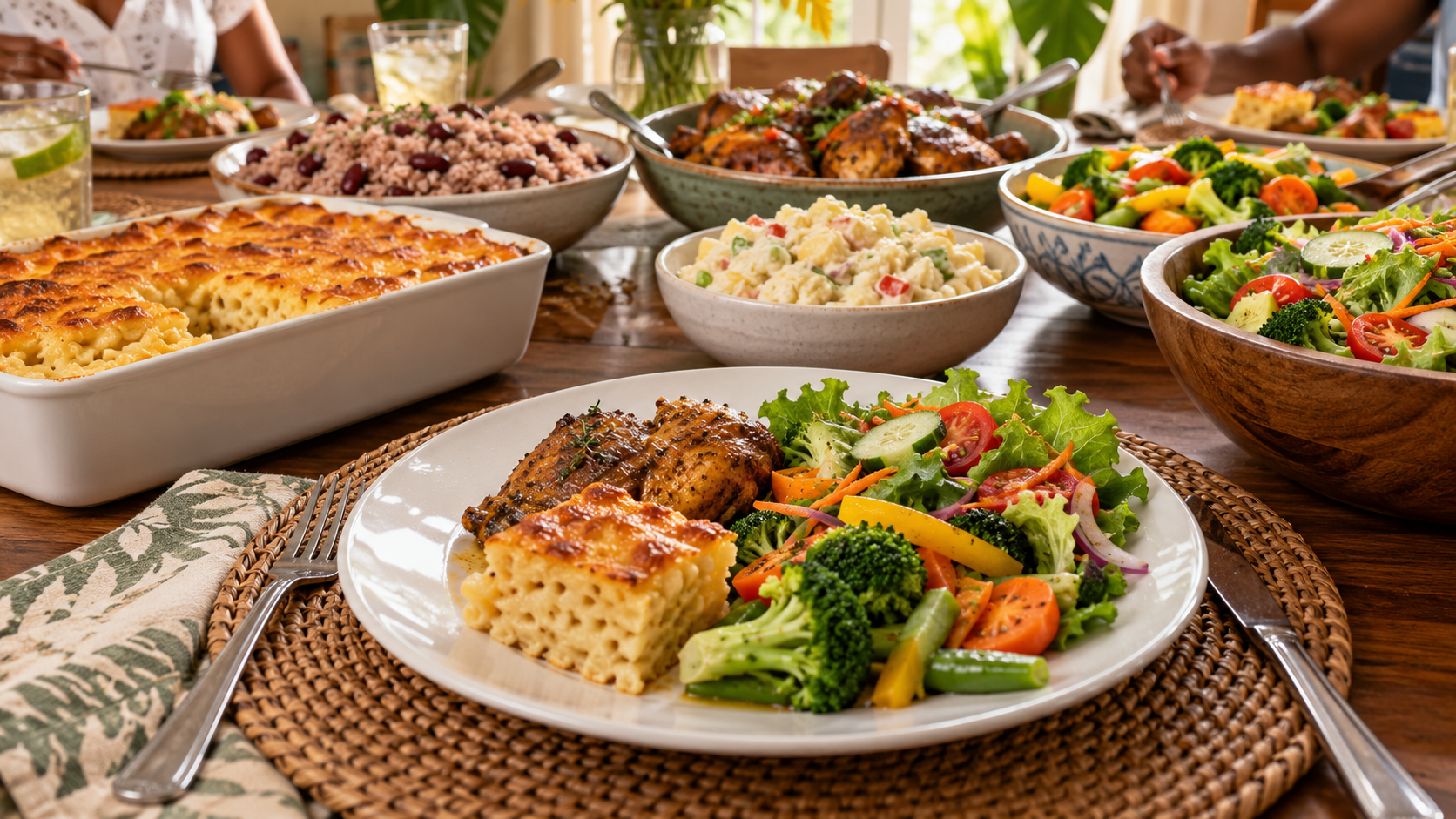
Sweet potato can replace white potato occasionally, but the serving still matters. Breadfruit can replace rice or chips, but it should not simply be added to an already starch-heavy plate. Macaroni pie and potato salad can remain part of family meals, but smaller servings leave room for vegetables and protein.
The most useful change may be one of the simplest: choose the carbohydrate you want most, give it an appropriate section of the plate and resist the urge to surround it with several others.
The goal is not a plate without foods you love. It is a plate with better proportions.
Discover more from Discover Montserrat
Subscribe to get the latest posts sent to your email.

