
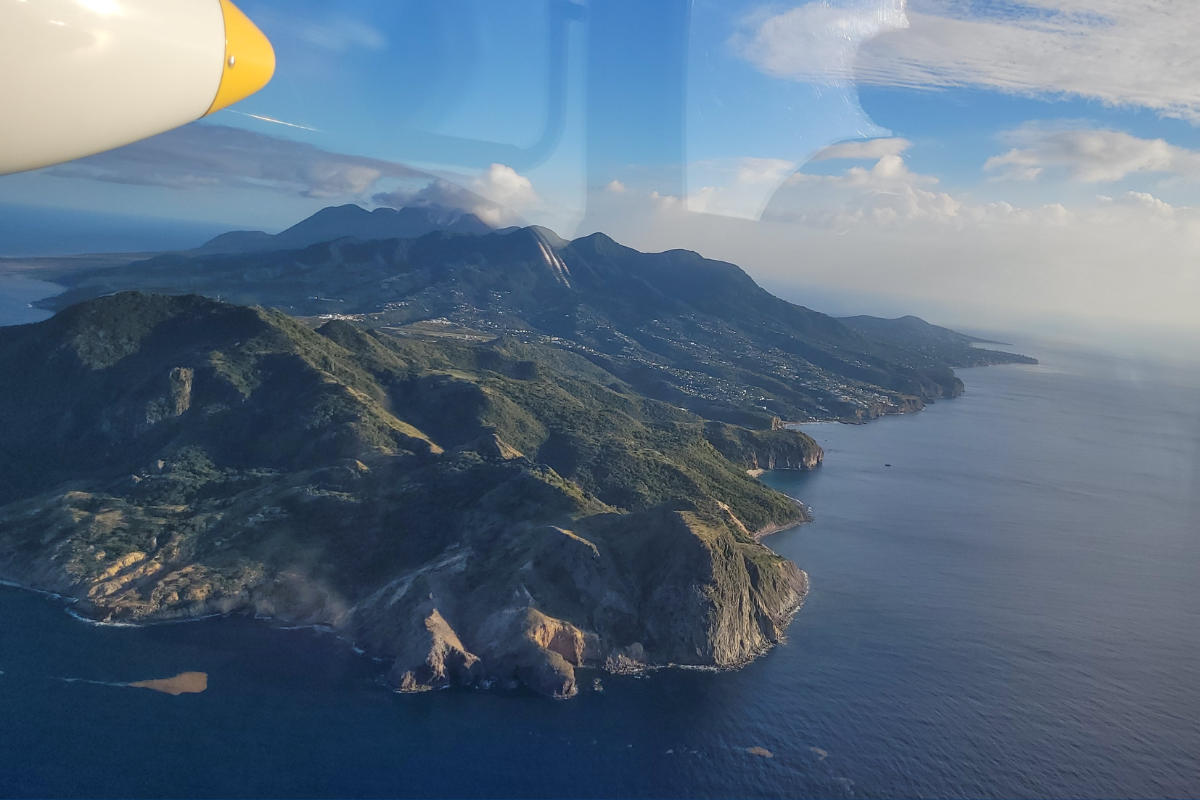
Montserrat doesn’t move like a resort island, and it doesn’t pretend to. Transport here reflects the realities of a small population, limited infrastructure, and a post-volcano economy still balancing daily life with tourism.
Understanding how the island actually moves, not how visitors assume it should, will shape whether your trip feels frustrating or freeing.
1. There Are Buses But No Fixed Schedule
Yes, Montserrat has buses.
No, they do not operate on a fixed, published timetable.
Local buses are typically:
- Privately operated
- Run by drivers who often have main jobs elsewhere
- Available before or after work hours, or when demand makes it worthwhile
This means:
- A route may run in the morning and late afternoon
- Service may pause entirely during the workday
- Availability can change day to day
Buses serve residents first, not visitors on a schedule. They are useful if your timing aligns, but they are not a dependable transport strategy for visitors with fixed plans.
2. Renting a Car Is Still the Smartest Option
Because bus service is irregular, renting a car remains the most practical choice for visitors.
A car gives you:
- Independence from transport gaps
- Access to beaches, trails, and viewpoints
- Control when services pause or end early
The other challenge is finding a car to rent. During peak seasons there is more demand than cars. Find a list of companies with rentals here.
Driving here requires patience, not speed. Roads are narrow and winding, and you drive on the left. But the trade-off is freedom and that matters on an island where transport doesn’t run on demand.
3. Taxis Are Reliable with Planning
Taxis operate differently here than in large destinations.
They are:
- Usually pre-arranged, not hailed
- Commonly used for airport transfers and tours
- Run by drivers who may be managing multiple commitments
If you’re using taxis:
- Book ahead
- Confirm pick-up and return times
- Don’t assume instant availability
On the upside, taxi drivers are often your best local guides. But again, planning beats spontaneity.
4. Walking Is Area-Specific, Not Island-Wide
Walking works within villages such as Salem or Little Bay.
It does not work well:
- Between villages
- Between accommodation and attractions
- As a primary way to explore the island
Distances may look short on a map, but hills, heat, and narrow roads quickly change that reality.
5. Sea Access is Seasonal and Currently Unavailable
This is where expectations most often clash with reality.
There is currently no ferry service operating to Montserrat.
Even when ferry service exists:
- It is highly dependent on sea conditions
- Rough seas frequently disrupt travel
- The most challenging period is December to April
Ironically, this is also:
- Peak tourism season
- Festival season
- When visitors most expect seamless access
Sea travel to Montserrat has never been guaranteed and should never be assumed when planning a trip.
6. Arrival and Movement Set the Pace of Your Trip
Most visitors arrive by air through John A. Osborne Airport. Flights connect to Montserrat via the V.C. Bird International Airport in Antigua & Barbuda and the Princess Juliana International Airport in St. Maarten. Get airline information here.
Flights are:
- Limited in frequency
- Weather-dependent
- Not designed for tight, multi-island hopping schedules
This naturally slows the rhythm of the island. Montserrat is not built for rushed itineraries or packed checklists.
The Bottom Line
Montserrat moves on human scale, not tourism automation.
Buses exist, but run when drivers can
Ferries are not guaranteed and currently unavailable
Cars and planning give you freedom
Time stretches, and that’s intentional
Visitors who enjoy Montserrat most are not the ones trying to make it behave like somewhere else but those willing to move with it.
Part of the Visitor Education Series by Discover Montserrat.
Discover more from Discover Montserrat
Subscribe to get the latest posts sent to your email.

