
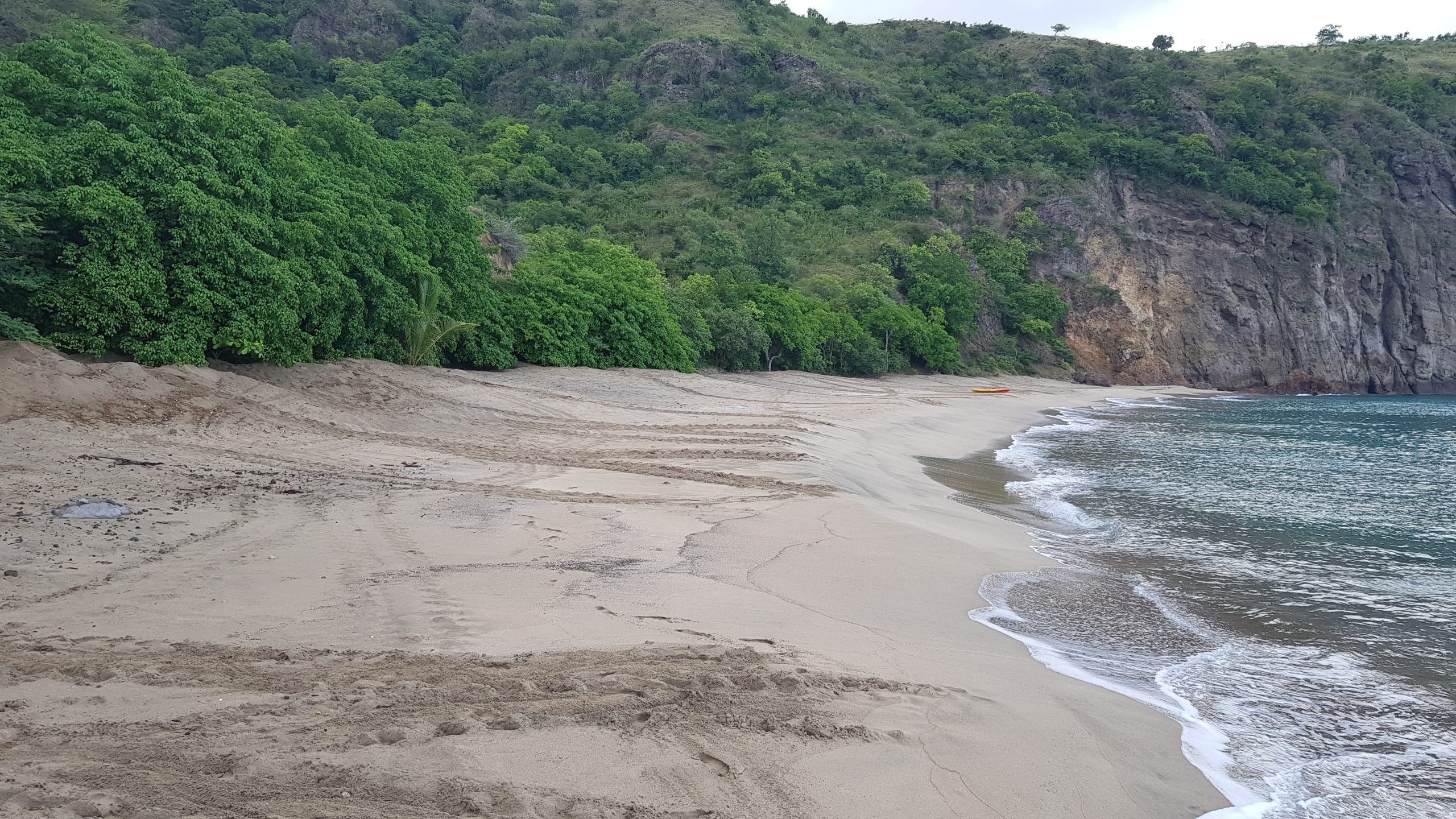
As turtle nesting season gets underway in Montserrat, conservationists are reminding residents and visitors that the island’s beaches play a critical role in the survival of some of the world’s most endangered marine species.
The nesting season runs through October and marks the annual return of female sea turtles to the beaches where they themselves hatched decades earlier.
Montserrat’s waters are home primarily to endangered green turtles and critically endangered hawksbill turtles, although leatherback and loggerhead turtles are also found around the island. The island’s warm tropical waters, healthy reefs and seagrass beds provide important feeding grounds for juvenile turtles throughout the year.
According to the Montserrat Animal Protection Society (MAPS), nesting females can travel hundreds or even thousands of miles across the ocean before returning to lay their eggs on the same beaches where they were born.
As interest in turtle watching grows, conservationists are encouraging the public to enjoy the experience responsibly.
“If you are going down to the beach at night to try to see female turtles laying eggs, please park your vehicle away from the beach and remember to keep your voice and other noises down so that you don’t scare them,” said Anne Marie Graham during a recent MAPS Minute.
Disturbances can cause turtles to abandon their nesting attempts and return to the sea without laying their eggs.
Artificial light is another major threat during nesting season. Bright lights can disorient both nesting females and newly hatched turtles.
Graham advises beachgoers to switch off flashlights, vehicle lights and phone lights whenever possible and allow their eyes to adjust naturally to the darkness. While a nesting turtle becomes less sensitive to disturbance once she begins laying eggs, noise and light should still be kept to a minimum.
The challenge continues after the eggs hatch. Baby turtles instinctively move toward the brightest horizon, which under natural conditions is the moonlit ocean. Artificial lighting from homes, vehicles or other sources can lead hatchlings inland, away from the safety of the sea and towards danger.
Boaters are also being asked to remain vigilant during the season. Mating turtles often rest at the water’s surface and can be difficult to spot, increasing the risk of collisions with vessels.
Swimmers and snorkellers may also encounter groups of turtles, particularly around sunset when several animals can often be seen in the same area.
“If they approach you, stay still and let them move around you,” Graham advised.
Sea turtles have survived for more than 100 million years, but today face threats from habitat loss, pollution, coastal development, fishing activity and climate change. Successful nesting seasons on islands like Montserrat are therefore vital to the long-term recovery of their populations.
Residents and visitors are encouraged to enjoy the opportunity to observe these remarkable animals while helping to ensure that future generations can do the same.
MAPS regularly shares updates, educational information and volunteer opportunities through its social media channels throughout the nesting season.
Listen to the MAPS Minute Saturday June 6, 2026 “Montserrat Animal Protection Society (MAPS) Minute” with Anne Marie Graham | Montserrat Radio Echo
Discover more from Discover Montserrat
Subscribe to get the latest posts sent to your email.