
Fruit juice, coconut water, coffee and tea can all fit into a healthy diet. The problem is that liquid calories are easy to consume, easy to underestimate and often poor at keeping us full.
You have reduced your portions, added more vegetables to your plate and committed to regular exercise. You are even drinking juice instead of soda and reaching for coconut water after the gym.
Yet the weight is not shifting.
The missing calories may not be on your plate. They may be in your glass.
A sweetened morning coffee, a large bottle of fruit juice with lunch, coconut water after exercise and two glasses of wine in the evening can add several hundred calories to the day. Because drinks rarely create the same feeling of fullness as solid food, most people do not compensate by eating substantially less.
This does not mean giving up a good cup of coffee, refusing fresh juice forever or treating coconut water as a dangerous substance. It means recognising that drinks count.
As the NHS explains, “Calories found in food and drink give you energy.” If the body regularly receives more energy than it uses, the excess can contribute to weight gain.
Coconut water is nutritious, but it is not calorie-free
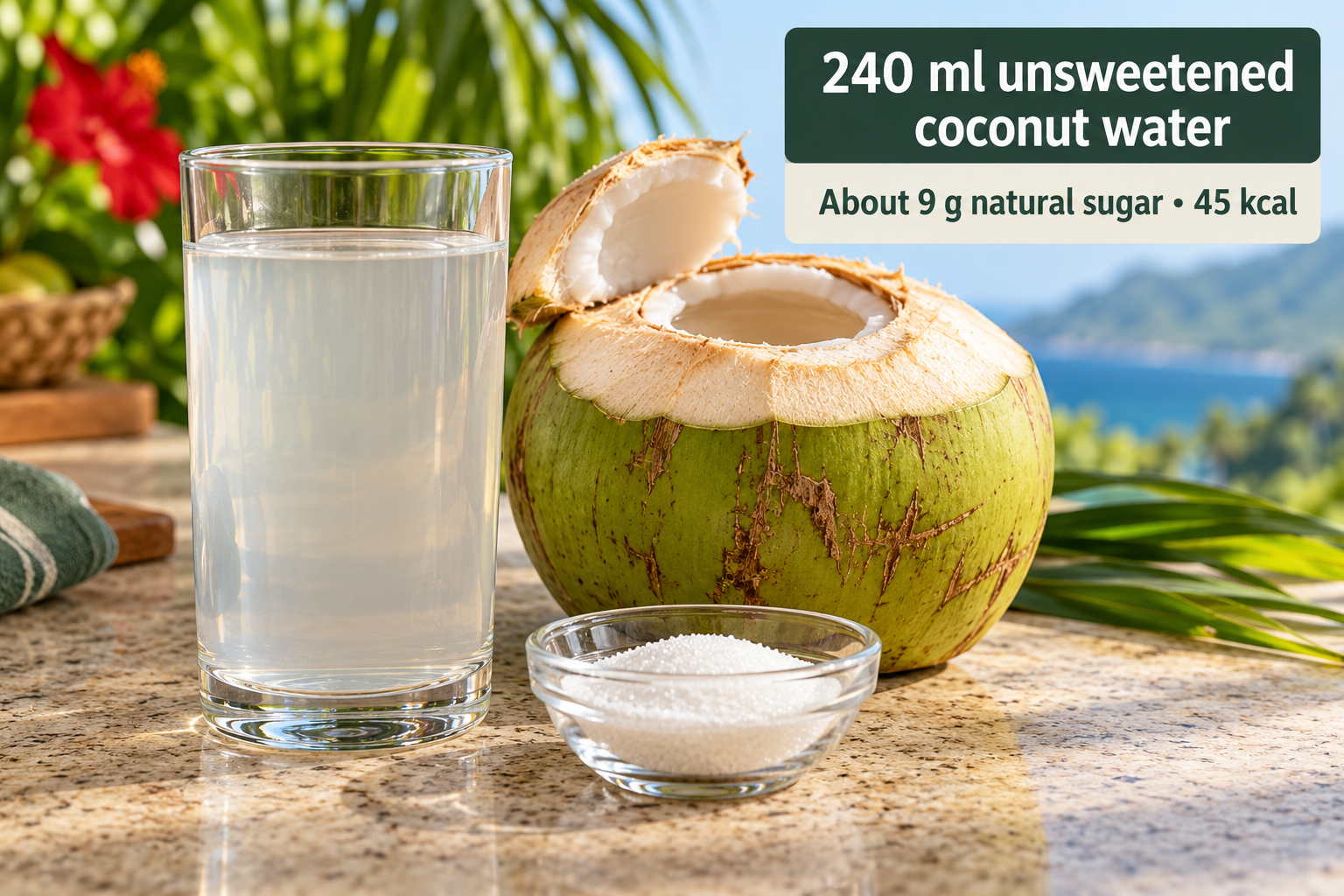
Fresh coconut water is deeply connected to Caribbean life. It is refreshing, provides fluid and contains minerals including potassium.
It is generally lower in calories than soda or many fruit juices. However, it still contains naturally occurring sugar and calories. A 240ml cup of fresh coconut water contains approximately 45 calories and around nine grams of carbohydrate, although the amount varies according to the coconut and the packaged product.
The difficulty is that a coconut often contains more than one cup of water. A large bottle may also hold two or three servings.
Coconut water can be a good choice, particularly in hot weather or after prolonged physical activity. But it does not need to replace ordinary water throughout the day.
Check packaged varieties for added sugar. “Coconut drink”, flavoured coconut water and coconut beverages may be very different from unsweetened coconut water.
Coconut water should also be consumed with medical guidance by people who have been told to restrict potassium because of kidney disease or certain medications.
Fruit juice is not the same as whole fruit
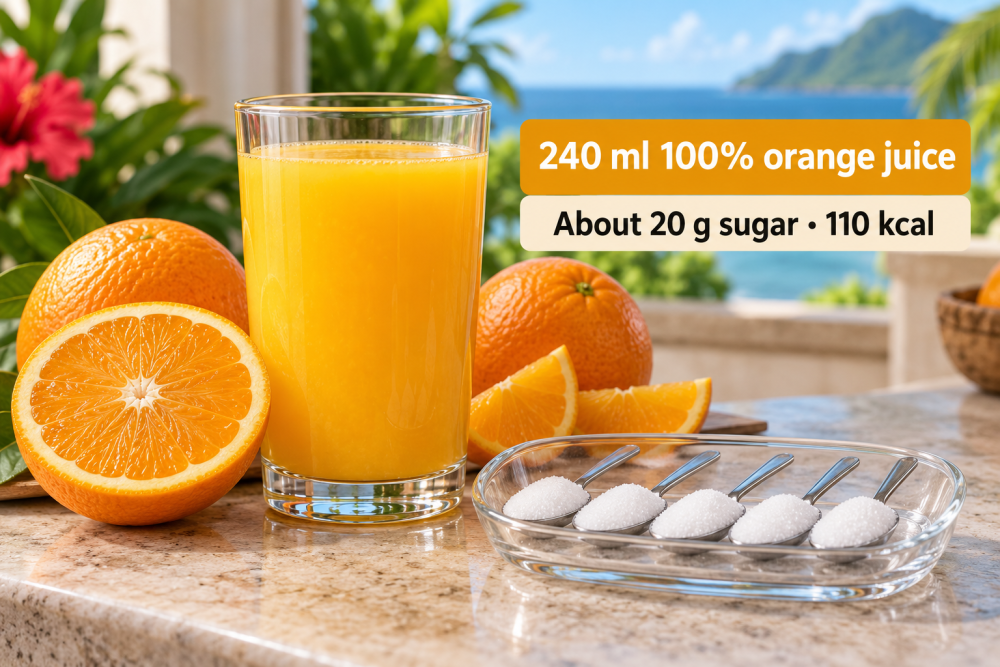
Orange juice, mango juice, guava juice, soursop juice and other fruit drinks are often seen as healthier alternatives to soda.
They may provide some vitamins, but juice does not affect the body in exactly the same way as eating whole fruit.
Whole fruit contains fibre and requires chewing. It generally takes longer to eat and is more filling. Juicing removes much of the fibre and makes it possible to consume the sugar from several pieces of fruit within minutes.
The sugars in unsweetened fruit juice are therefore classified as free sugars. The NHS advises limiting fruit juice and smoothies to a combined total of 150ml a day and consuming them with a meal.
One hundred and fifty millilitres is a small glass, not a large tumbler or a bottle.
Freshly squeezed juice is not exempt simply because it contains no added sugar. Its sugar came from fruit, but it is still concentrated and quickly consumed.
This does not make juice identical to soda. Juice may provide vitamins and plant compounds that ordinary soda does not. But both can deliver a substantial amount of sugar without producing much fullness.
“No added sugar” does not mean no sugar
Packaging language can be misleading.
A drink labelled “no added sugar” may still contain naturally occurring sugar. One marked “made with real fruit” may contain only a small percentage of juice alongside water, sweeteners or concentrates. A “juice drink” is not necessarily the same as 100 per cent juice.
Look at:
– The serving size
– Calories per serving
– Total sugar
– Added sugar, where listed
– The number of servings in the bottle
– The ingredient list
A bottle may appear to contain 100 calories until you notice that it holds two servings.
Smoothies can become meals without looking like meals
A smoothie made with fruit, vegetables, yoghurt or milk can provide useful nutrients. It can also become highly calorific when it includes several fruits, sweetened yoghurt, honey, nut butter, oats, coconut milk and protein powder.
Each ingredient may appear healthy on its own. Together, they can create the energy equivalent of a substantial meal.
Blending generally retains more fibre than juicing, but smoothies are still consumed more quickly than the whole ingredients would be eaten. Portion size remains important.
If the smoothie is replacing breakfast, it should contain enough protein and fibre to be satisfying. If it accompanies breakfast, it may simply be adding another meal’s worth of energy.
Coffee is rarely the problem. What goes into it may be
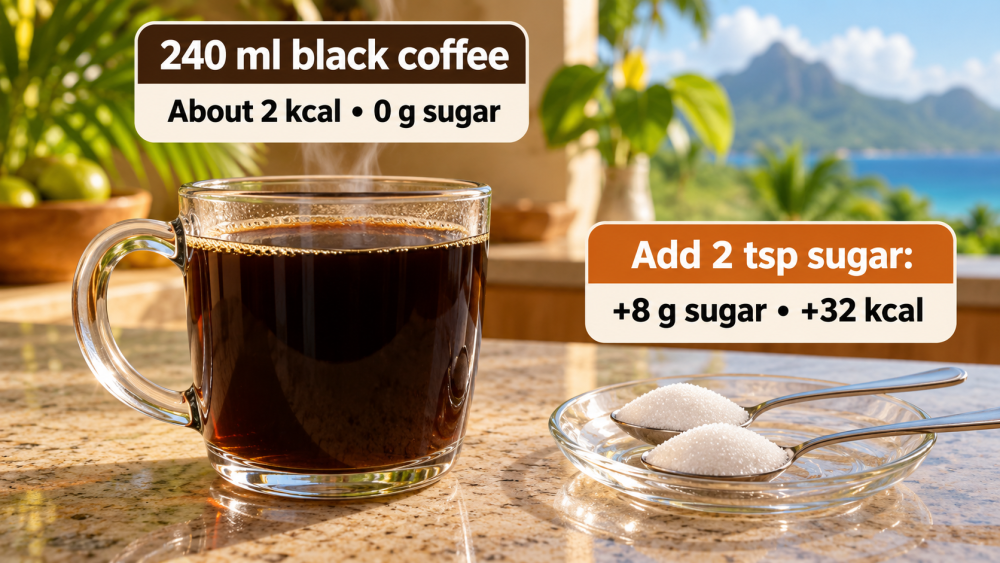
Plain black coffee contains very few calories. Tea without milk or sweetener is similarly low in energy.
The calorie count rises when sugar, honey, condensed milk, cream, flavoured syrups, whipped toppings or large quantities of full-fat milk are added.
A small coffee with a little milk is not the same drink as a large flavoured latte. A homemade cup of tea with one teaspoon of sugar is not the same as a heavily sweetened café drink or bottled iced tea.
The NHS confirms that water, lower-fat milk and sugar-free drinks, “including tea and coffee”, can contribute to daily fluid intake. It also recommends consuming caffeine in moderation.
For most healthy adults, the US Food and Drug Administration cites 400mg of caffeine per day as an amount not generally associated with negative effects. Sensitivity varies, however, and some people experience palpitations, anxiety, digestive problems or disrupted sleep at much lower amounts.
Poor sleep can then make appetite, stress and weight management more difficult. That late-afternoon coffee may therefore matter for reasons beyond its calorie content.
Is honey better than sugar?
Not in any meaningful way for weight loss.
Honey contains small quantities of plant compounds and minerals, but the amount normally added to tea or coffee is too small to make it a significant source of nutrients. It still contains sugar and calories.
The body may process honey and table sugar somewhat differently, but both contribute to free-sugar intake. The NHS specifically includes sugars naturally present in honey and syrups within its definition of free sugars.
Honey is also easy to pour generously. A spoonful may contain more sugar and calories than the level teaspoon of table sugar it was intended to replace.
Use honey because you prefer the flavour, not because you believe it does not count.
A better strategy is to gradually reduce the sweetness of tea and coffee. Move from two teaspoons to one and a half, then one. Use spices such as cinnamon or nutmeg for flavour. If you genuinely enjoy your daily coffee sweetened, keep it and become more selective about sugar in your other drinks.
Moderation should make room for what you enjoy. It should not rely on disguising sugar with a healthier-sounding name.
Caribbean homemade drinks deserve attention too
Sorrel, mauby, ginger beer, tamarind juice, passion fruit drink, lemonade and sea moss beverages can all be part of Caribbean food culture.
Their calorie and sugar content depends heavily on the recipe.
Sorrel itself is not the problem. The amount of sugar added to the jug is. The same applies to mauby and ginger beer. Sea moss may be relatively light before condensed milk, sweetened milk, sugar, syrups and flavourings are blended into it.
Homemade does not automatically mean low-sugar. Natural does not mean calorie-free.
These drinks can still be enjoyed. Useful adjustments include:
– Gradually reducing the sugar in the full recipe.
– Diluting very sweet drinks with water or sparkling water.
– Serving them in smaller glasses.
– Adding spices, citrus or fresh herbs for flavour.
– Reserving sweeter traditional drinks for particular meals or occasions.
– Avoiding the assumption that several refills do not count because the drink was homemade.
Sports and energy drinks are not everyday hydration
Sports drinks can be useful during prolonged or intense exercise, particularly in heat, because they may replace carbohydrate and electrolytes.
Most ordinary gym sessions do not require them. Water is usually sufficient for shorter or moderate workouts.
Energy drinks are different. They may contain substantial caffeine, sugar or both. They should not be treated as hydration, and they can worsen sleep or cause unpleasant symptoms in people who are sensitive to caffeine.
After exercise, drinking a high-calorie beverage can replace much of the energy used during the workout. That may be appropriate for an athlete training for several hours, but less helpful for someone trying to create a modest calorie deficit through a 30-minute session.
Alcohol counts quickly
Rum punch, wine, beer, stout, cocktails and creamy liqueurs bring another source of liquid energy.
Alcohol provides seven calories per gram, almost as many as fat. Mixers, syrups, juices and creams increase the total further.
A drink can also lower inhibitions around food, making the late-night takeaway or extra serving more likely.
UK guidance advises men and women not to drink more than 14 units a week on a regular basis, spread across three or more days. That is a health limit, not a recommendation or a guarantee against weight gain.
Alcohol-free days, smaller measures and lower-sugar mixers can make a significant difference without requiring permanent abstinence.
What should you drink?
Water remains the simplest everyday option because it hydrates without adding calories or sugar.
That does not mean every other drink must disappear. A realistic routine might include:
– Water as the main source of hydration.
– Tea or coffee with modest additions.
– Coconut water in a measured serving rather than as unlimited water.
– A small glass of juice with a meal rather than a large bottle.
– Whole fruit more often than juice.
– Sweet traditional drinks in smaller portions or with less added sugar.
– Alcohol less frequently and in measured servings.
– Occasional indulgent coffees enjoyed consciously rather than treated as calorie-free caffeine.
The aim is not to drink joylessly. It is to notice what has been slipping past your awareness.
That morning coffee may be worth keeping exactly as you enjoy it. The large juice, sweetened coconut water, afternoon iced coffee and evening wine may not all need to accompany it on the same day.
Like the loaded Sunday-lunch plate, the problem is often not one beloved item. It is everything arriving together.
Discover more from Discover Montserrat
Subscribe to get the latest posts sent to your email.

