
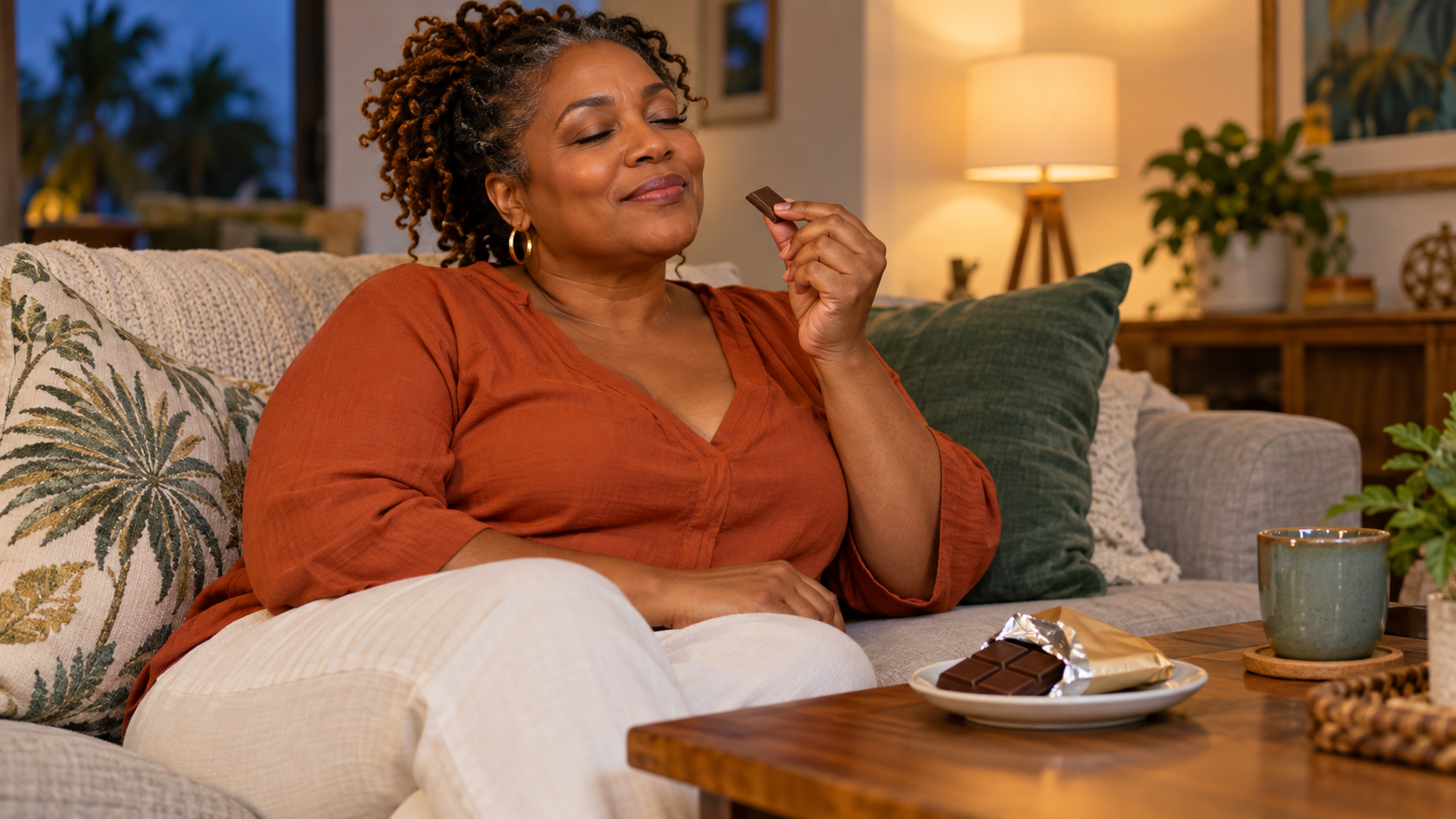
Chocolate after a difficult day, crisps when work will not end and a weekend of overeating after a disciplined week can feel like failures of willpower. Often, they are signs that food is being asked to meet an emotional need.
It has been one of those days.
The emails have not stopped. A bill arrived that you were not expecting. Someone at home needs something from you, and the conversation you have been avoiding with your partner is still waiting. You are tired, but there is more work to finish.
For most of the day, very little has felt within your control. Then you open the cupboard.
Chocolate offers sweetness and comfort. Crisps provide the salt and crunch you have been craving. Cake, ice cream or a familiar Caribbean treat can deliver a brief sense of relief. Choosing what to eat may feel like the easiest decision you have made all day.
Everyone has a go-to food for difficult moments. Eating it occasionally is not a moral failure and one treat will not undo a healthy lifestyle. The problem begins when food becomes the main way of coping with stress, anger, loneliness, boredom, exhaustion or feeling powerless.
The answer is not to deny the feeling or pretend you do not need comfort. It is to identify what you are actually hungry for, then decide whether food is the best way to meet that need.
Are you hungry, or do you want to feel different?
Physical hunger usually develops gradually. A range of foods may satisfy it, and it tends to ease once enough has been eaten.
Emotional hunger can feel sudden and specific. You may not want food in general. You want chocolate, a salty snack, something sweet or a particular comfort meal. It can appear even when you have eaten recently, and the urge may continue after your stomach is full because fullness was never the real goal.
Calderdale and Huddersfield NHS Foundation Trust suggests asking: “Am I really hungry or do I just want to change the way I feel?”
That question is not intended to shame you out of eating. It creates a pause between the feeling and the action.
Perhaps you are genuinely hungry because you skipped lunch. In that case, a proper meal or filling snack is the sensible response.
Perhaps you are exhausted and using food to keep yourself working. You may need rest more than sugar. Perhaps you are angry but have been swallowing your words all day. Food can occupy your mouth, but it cannot have the conversation for you.
Notice the pattern before trying to change it
Emotional eating often happens quickly and automatically. The hand reaches for the snack before the mind has named the feeling.
University Hospitals Sussex NHS Foundation Trust advises identifying the personal triggers, thoughts and emotions connected to eating. Its example follows a simple sequence: an event triggers a thought, the thought produces an emotion and eating follows as the action.
For a week or two, keep a short record of:
– What happened just before you wanted to eat.
– Whether you were physically hungry.
– What you were thinking and feeling.
– What food you wanted.
– What you ate and how you felt afterwards.
The point is not to count every crumb or criticise yourself. It is to find patterns.
You may discover that you snack when working late, after a tense telephone call, while watching television alone or when you finally sit down after caring for everyone else. You may eat when anxious, but also when celebrating or when the weekend feels like your reward for surviving the week.
Once the pattern is visible, you can plan for the moment rather than relying on willpower when you are already depleted.

Why tiredness makes the cupboard louder
Sometimes the urge is emotional. Sometimes it is also physical.
Long gaps between meals, inadequate sleep and a demanding day can leave you hungry, irritable and less interested in making considered choices. If you are tired but determined to keep working, a sugary food may seem like quick energy. The lift is usually temporary, and it can be followed by another craving.
Regular, balanced meals can reduce the likelihood of reaching the evening excessively hungry. Include protein and fibre to help meals feel satisfying. Keep useful snacks available, such as fruit with yoghurt, nuts in a measured portion, vegetables with hummus or a boiled egg.
This is not about replacing every piece of chocolate with a carrot. It is about recognising when the body needs nourishment rather than asking sweets to carry you through exhaustion.
Persistent fatigue should not simply be blamed on a busy life. The NHS notes that tiredness can have several causes and advises seeking medical help when it is ongoing or accompanied by other symptoms.
One meal did not ruin the week
You have exercised, eaten more vegetables and managed your portions all week. Then Friday arrives.
There is a business dinner with rich food, dessert and drinks. On Saturday, you decide the week is already ruined, so you eat whatever you want. By Sunday evening, one substantial meal has become an entire weekend of abandoning your routine.
This is all-or-nothing thinking. The dinner did not erase the exercise you completed or the choices you made earlier in the week. The damage is more likely to come from treating one indulgent meal as permission to continue eating past enjoyment.
Return to your usual pattern at the next meal. Do not punish yourself by starving the following day or attempting an extreme workout. A rich dinner is one meal, not a verdict.
The NHS advises people trying to lose weight to set realistic goals, expect change to take time and “be kind to yourself”.
Plan for eating out without removing the pleasure
Restaurant meals, celebrations and business dinners are part of life. The aim is not to sit at the table with a dry salad while everyone else enjoys the evening.
Planning removes some of the decisions you would otherwise make while hungry, distracted or under social pressure.
Before going out:
– Check the menu and choose one or two options in advance.
– Avoid arriving ravenous. Eat normally during the day and have a light snack if the meal will be late.
– Decide what matters most to you. You might want the dessert, the cocktail or the creamy main course, but not necessarily all three.
– Ask for sauces or dressings on the side when that will not spoil the dish.
– Stop when comfortably satisfied and take leftovers home if practical.
– Resume your normal meals afterwards.
Cambridge University Hospitals recommends viewing menus before arriving and deciding what to eat, with backup choices in case the first option is unavailable.
A plan is not deprivation. It lets you choose the part of the experience you genuinely want instead of consuming everything simply because it is there.

Find another way to feed the urge
If food is being used for comfort, removing it without replacing the comfort leaves the original need untouched.
Ask yourself: What would help me feel cared for right now?
The answer may be a long soak in the bath with your favourite scents, a walk, a drive with music, prayer, journalling, an early night or a telephone call with someone who lets you be honest. You may need ten quiet minutes with the door closed. You may need to cry, say no, ask for help or finally address the problem you have been carrying.
The alternative should match the need. A walk may help with restlessness or anger, but it may not be the answer when you are severely tired. Journalling may help you name a feeling, but connection may be more useful when you are lonely.
One NHS self-help guide recommends creating a personal list of activities that can delay emotional eating and help manage difficult feelings, including writing down thoughts, gardening, dancing, doing a puzzle or telephoning a friend.
You can also pause and observe the craving rather than obeying it immediately. Cambridge University Hospitals describes this as “surfing the urge”. The craving may become stronger for a time and then subside, much like a wave.
Try waiting ten minutes. Name the feeling, drink some water and choose one comforting action. If you still want the food afterwards, you can make a deliberate decision rather than an automatic one.

You can still eat the chocolate
Managing emotional eating does not require banning the foods you love.
Sometimes you may decide that a piece of chocolate is exactly what you want. Put a portion on a plate, sit down and enjoy it without scrolling, working or standing over the packet. Taste it. Let the treat be the treat.
That may mean eating one or two pieces rather than the entire bar. It could mean buying a smaller bar, dividing a larger one into portions or keeping tempting foods somewhere less visible.
The goal is not perfect control. It is choice.
If you eat more than intended, avoid the familiar response of guilt followed by further overeating. Notice what happened, consider what you might do differently next time and continue with your next normal meal.

When it is more than occasional comfort eating
Emotional eating and binge eating are not automatically the same.
However, regularly consuming a large amount of food in a short period while feeling unable to stop, eating in secret, or experiencing significant shame and distress may indicate binge-eating disorder or another eating disorder. This is not something to solve through stricter dieting or greater self-criticism.
The NHS advises anyone who thinks they may have binge-eating disorder to speak with a GP. Treatment can include guided self-help and cognitive behavioural therapy to explore the thoughts, feelings and behaviours contributing to the pattern.
Give yourself what you actually need
Food is connected to memory, culture, celebration, family and pleasure. It is allowed to be comforting. The difficulty comes when it is expected to soothe every feeling that has nowhere else to go.
The next time you find yourself reaching for a snack after a punishing day, pause before judging yourself.
Ask what happened. Name what you feel. Decide what would genuinely help. You may need food, rest, movement, comfort, expression, company or a boundary.
And yes, you may still choose the chocolate.
The healthier change is not always saying no. Sometimes it is recognising that one piece can be enjoyed, while the rest of what hurts needs a different kind of care.
Discover more from Discover Montserrat
Subscribe to get the latest posts sent to your email.

