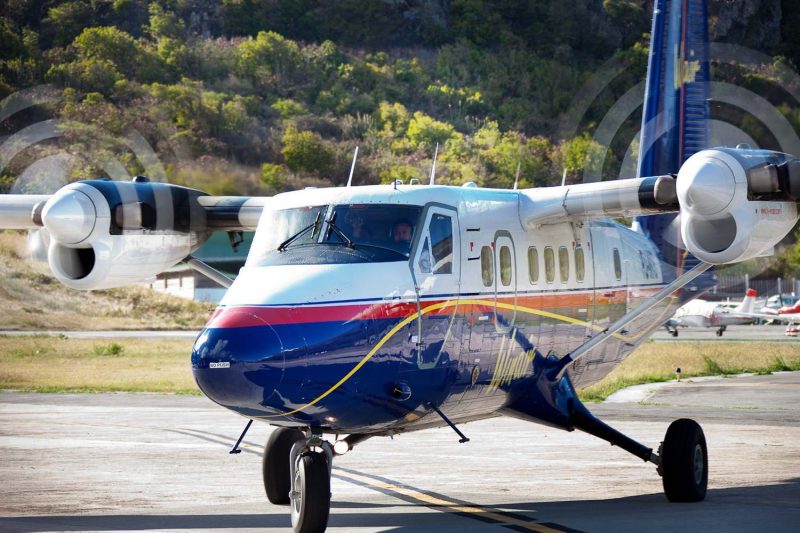
The Mountain Chicken Recovery Programme (MCRP) has welcomed 24 mountain chicken frogs to Montserrat as part of ongoing efforts to save one of the world’s most endangered amphibians from extinction.
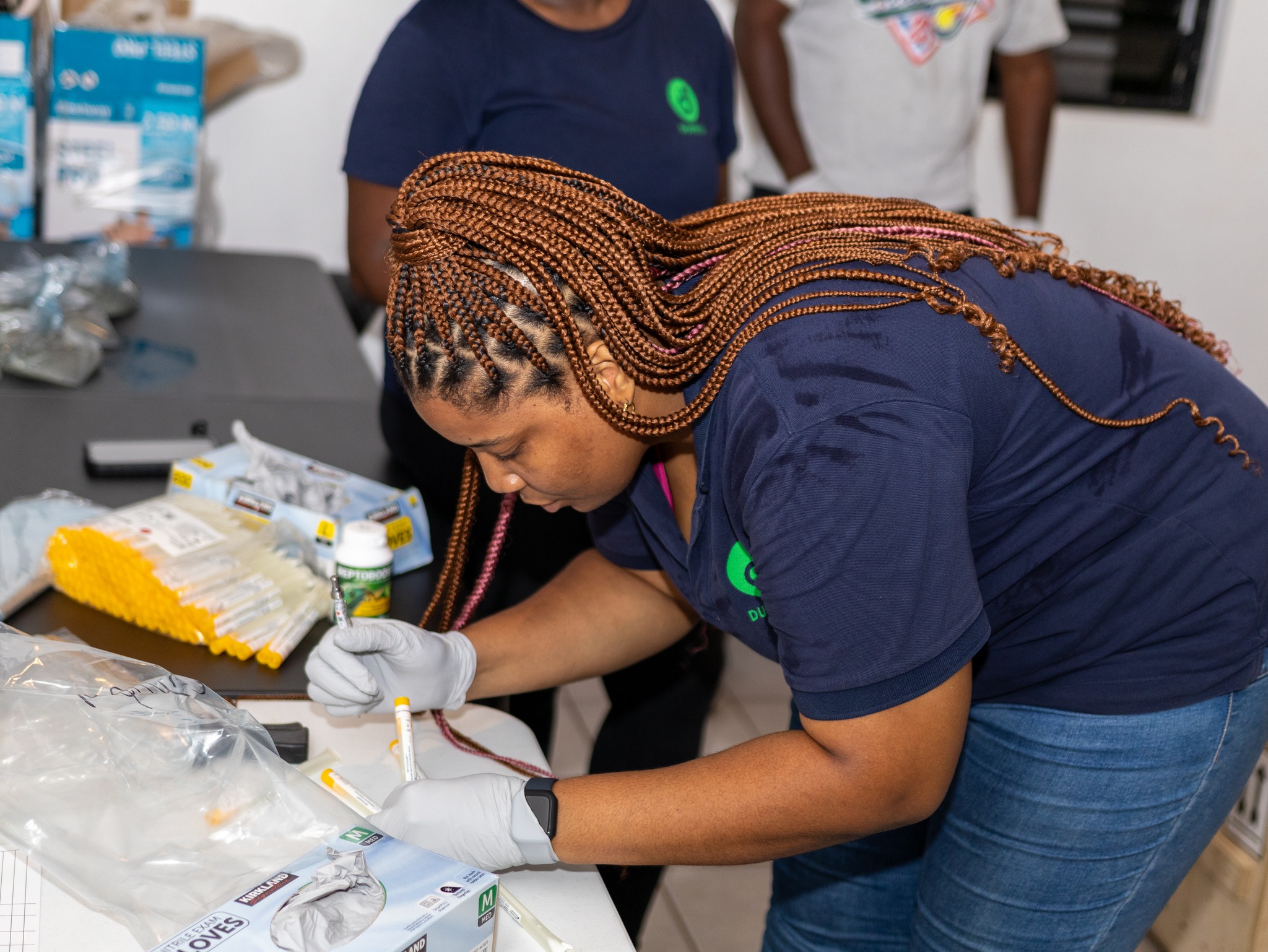
According to the MCRP, the frogs, transported from Nordens Ark in Sweden, were previously part of the international bio-secure breeding programme. On arrival in Montserrat, each animal was weighed, swabbed, and rehydrated with ringer’s solution, in line with veterinary protocols.
The new group includes 10 adult males, 10 adult females, and 4 juveniles, providing what the MCRP described as a “strong demographic foundation” for the next phase of the programme. This stage will focus on breeding the species in semi-wild conditions, a crucial step toward securing the long-term survival of the mountain chicken in Montserrat.
The arrival marks a significant milestone in global amphibian conservation, as well as in the restoration of fragile ecosystems in the Caribbean.
Native to Montserrat and Dominica, the mountain chicken frog was once abundant across both islands. Its distinctive call, often mistaken for a distant dog bark, made it an iconic presence in the region’s biodiversity. However, the species has been decimated by the chytrid fungus, which struck in 2002. Within a year, populations collapsed by more than 80%, a decline scientists describe as one of the fastest ever recorded for any amphibian.
This slideshow requires JavaScript.
A 2023 search in Dominica found only 21 mountain chickens left in the wild, down from hundreds of thousands just a few decades ago. The impact of chytrid, combined with habitat loss, hurricanes, and the effects of climate change, has pushed the species to the brink. Researchers warn it is one of the most alarming examples of how quickly a species can disappear.
Montserrat’s own population is now estimated at just 16 individuals (2023) living in an enclosed environment in the Centre Hills. Conservationists hope the lessons learned from Dominica, where some frogs have adapted to living with the fungus, will help revitalise Montserrat’s dwindling numbers.
The MCRP is a collaboration between ZSL, Chester Zoo, Durrell Wildlife Conservation Trust, WildDominique, Nordens Ark, Riga Zoo, Fauna & Flora, Montserrat’s Department of Environment, and the Forestry, Wildlife and Parks Division in Dominica. Funding for recent survey work has been provided by Re:wild.
Thank you to all parties involved who made this Translocation a reality,” the MCRP said in a statement thanking all the partners who made the latest translocation possible. “This milestone not only marks a major step forward for the survival of the mountain chicken in Montserrat but also contributes to global amphibian conservation and the restoration of biodiversity in fragile ecosystems.”
Discover more from Discover Montserrat
Subscribe to get the latest posts sent to your email.