Montserrat’s Ministry of Health and Social Services is preparing for one of its most ambitious reform periods in recent years, backed by a significant increase in funding and a broad strategy focused on healthcare access, chronic disease management, specialist services, mental health and support for vulnerable residents.
The ministry has been allocated $96.82 million in this year’s budget, representing a major increase over the previous year and signalling Government’s intention to strengthen both healthcare delivery and social protection systems over the next four years.
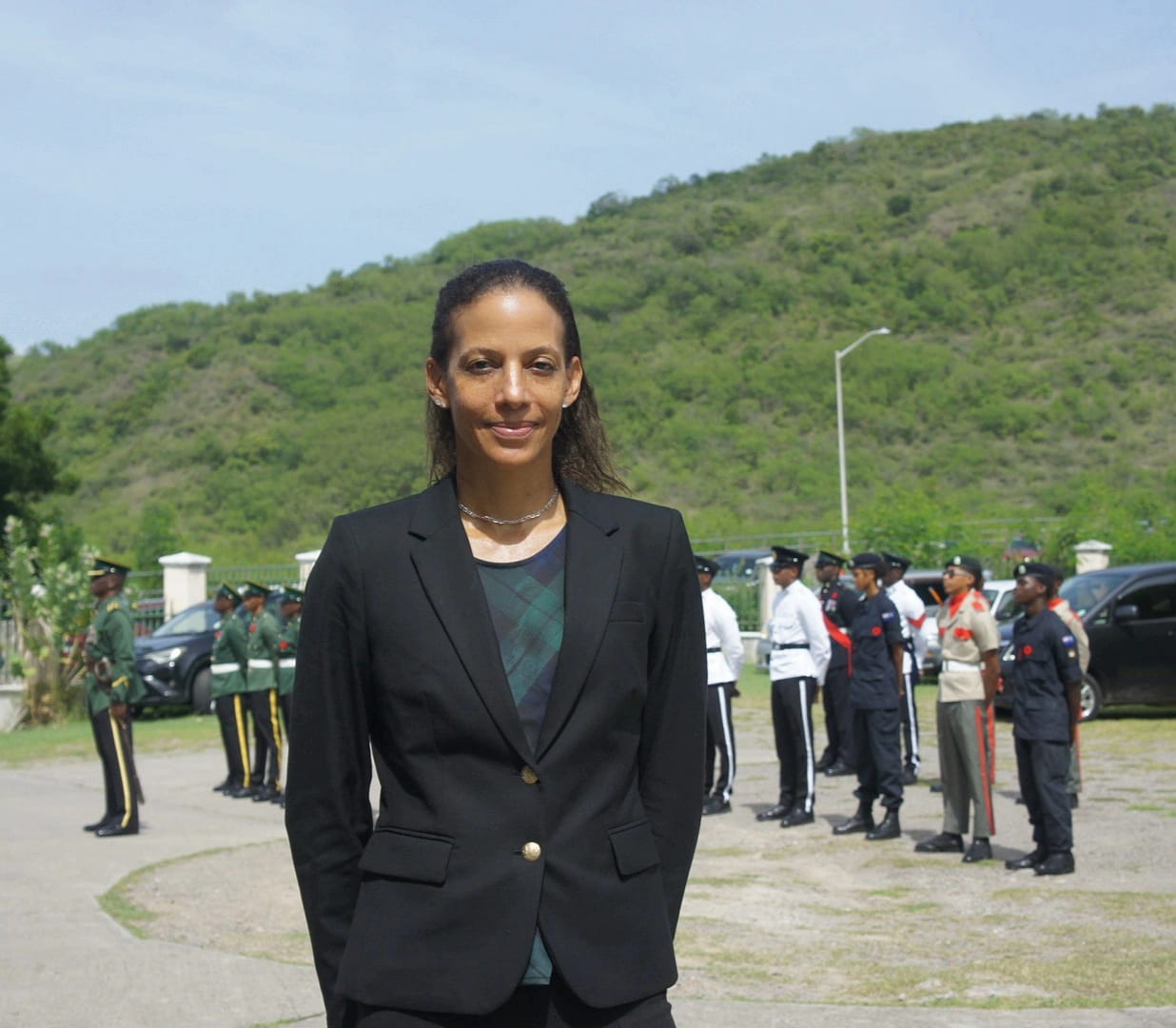
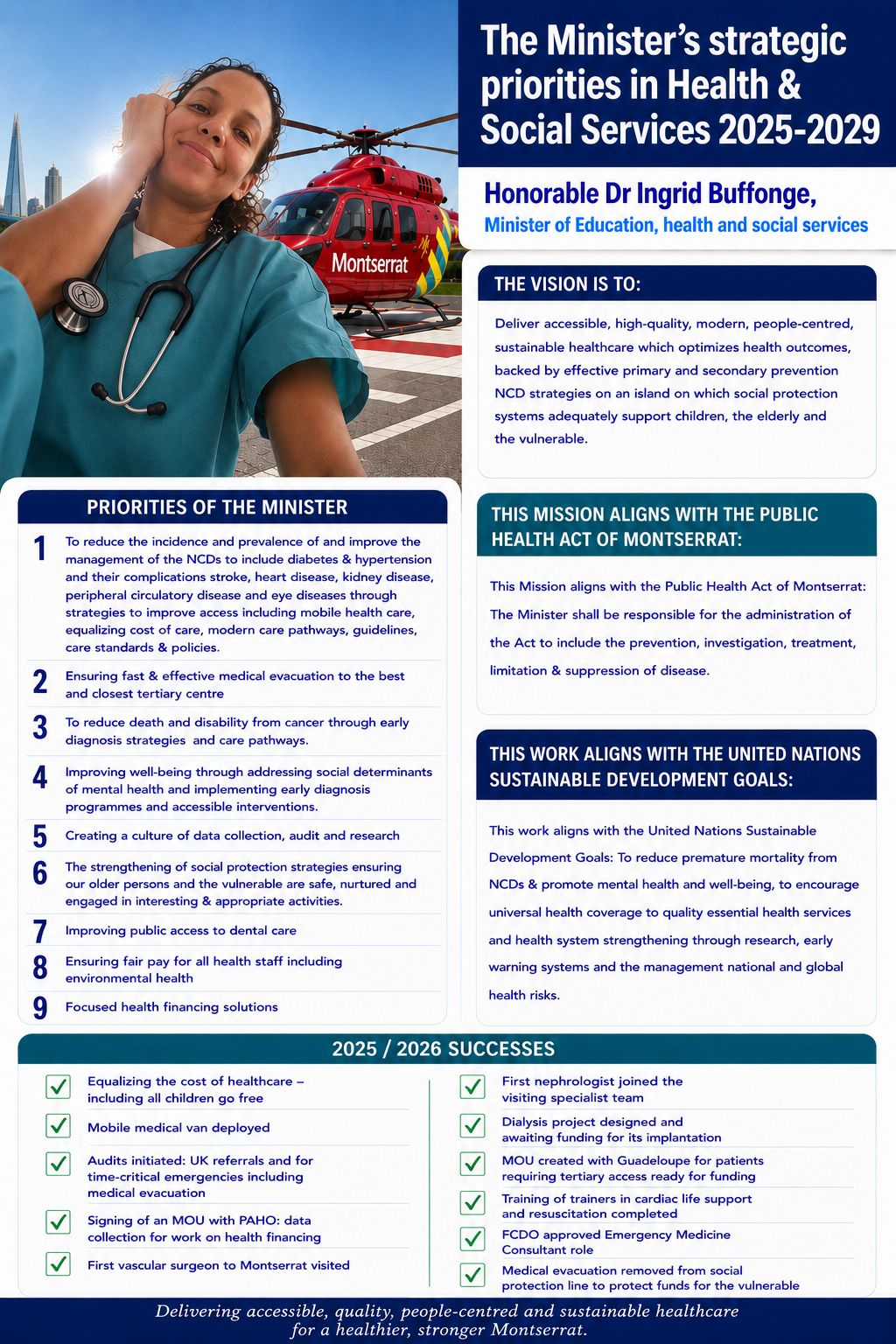
At the centre of the strategy is Minister of Education, Health and Social Services, Honorable Dr Ingrid Buffonge’s 2025–2029 vision for “accessible, high-quality, modern, people-centred, sustainable healthcare.”
The strategy places heavy emphasis on non-communicable diseases, commonly known as NCDs, which continue to be among the leading causes of illness and death across the Caribbean. Diabetes, hypertension, stroke, heart disease, kidney disease and eye disease are all specifically identified as major concerns.
Rather than focusing only on treatment, the plan aims to shift the healthcare system toward prevention, early diagnosis and long-term management. This includes expanding mobile healthcare services, modernising care pathways and improving standards, policies and access to care.
One of the clearest examples already implemented is the equalisation of healthcare costs, including free healthcare access for all children.
The ministry also deployed a mobile medical van during the 2025/2026 period, aimed at improving access to healthcare services for residents who may struggle to attend clinics or hospitals regularly.
Medical evacuation remains another major pillar of the strategy. Given Montserrat’s limited specialist and tertiary healthcare services, rapid overseas access for critical cases is considered essential.
The ministry says it is working to ensure “fast and effective medical evacuation to the best and closest tertiary centre,” while audits have already begun into UK referrals and emergency medical evacuation systems to improve efficiency and accountability.
Specialist healthcare access also appears to be expanding.
Among the achievements already highlighted are visits from the island’s first vascular surgeon and the addition of the first nephrologist to the visiting specialist team. The ministry has also completed the design phase of a dialysis project, although funding is still being sought for implementation.
An agreement with Guadeloupe to facilitate tertiary care access for patients has also been prepared and is awaiting funding support.
Cancer care and mental health are also prominent in the strategy.
The ministry plans to focus on reducing death and disability from cancer through earlier diagnosis and structured care pathways. Mental health initiatives will target both early diagnosis and the broader social conditions that affect well-being.
The social services component of the strategy focuses heavily on older persons and vulnerable residents. Dr Buffonge’s priorities include strengthening social protection systems to ensure vulnerable people are “safe, nurtured and engaged in interesting and appropriate activities.”
In a move designed to protect vulnerable funding pools, the ministry also removed medical evacuation costs from the social protection budget line.
The strategy also identifies healthcare workforce issues as a priority, including ensuring fair pay for all health staff, including environmental health personnel.
At a systems level, the ministry is attempting to build a stronger evidence-based healthcare model through increased data collection, audits and research. One step already taken is the signing of a memorandum of understanding with PAHO to support data collection work linked to health financing.
Emergency response capacity is also being strengthened. Training of trainers in cardiac life support and resuscitation has already been completed, while the UK Foreign, Commonwealth and Development Office has approved an Emergency Medicine Consultant role for Montserrat.
The ministry says its overall strategy aligns with both the Public Health Act of Montserrat and the United Nations Sustainable Development Goals, particularly around universal health coverage, reducing premature deaths from NCDs and improving mental health outcomes.
With a substantially larger budget now assigned to the ministry, expectations will likely grow around implementation, staffing, specialist services and measurable outcomes.
The challenge over the next four years will not simply be outlining priorities, but sustaining the funding, partnerships and operational capacity needed to deliver them on an island where healthcare access has long been shaped by geography, limited population size and the need for overseas specialist treatment.
Discover more from Discover Montserrat
Subscribe to get the latest posts sent to your email.