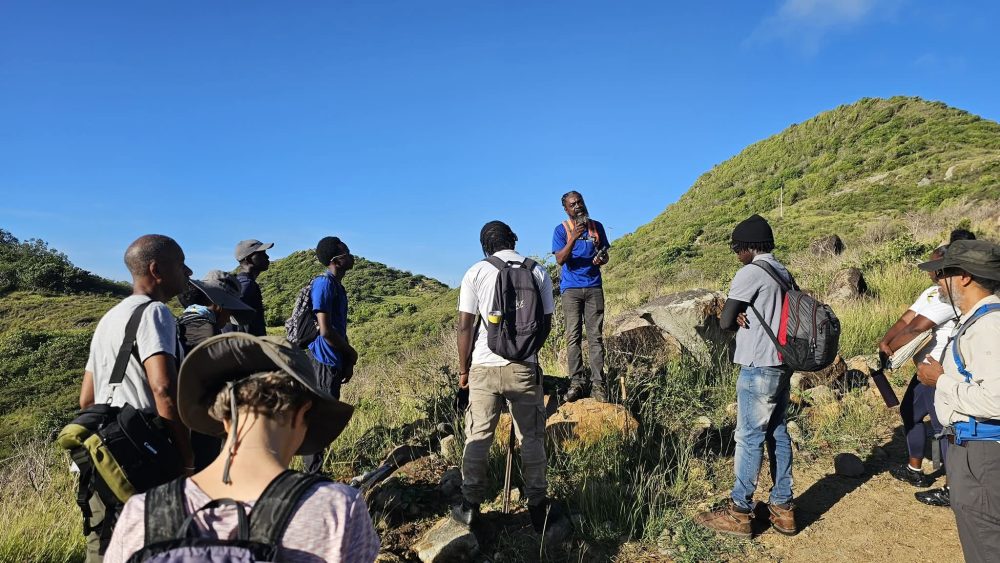


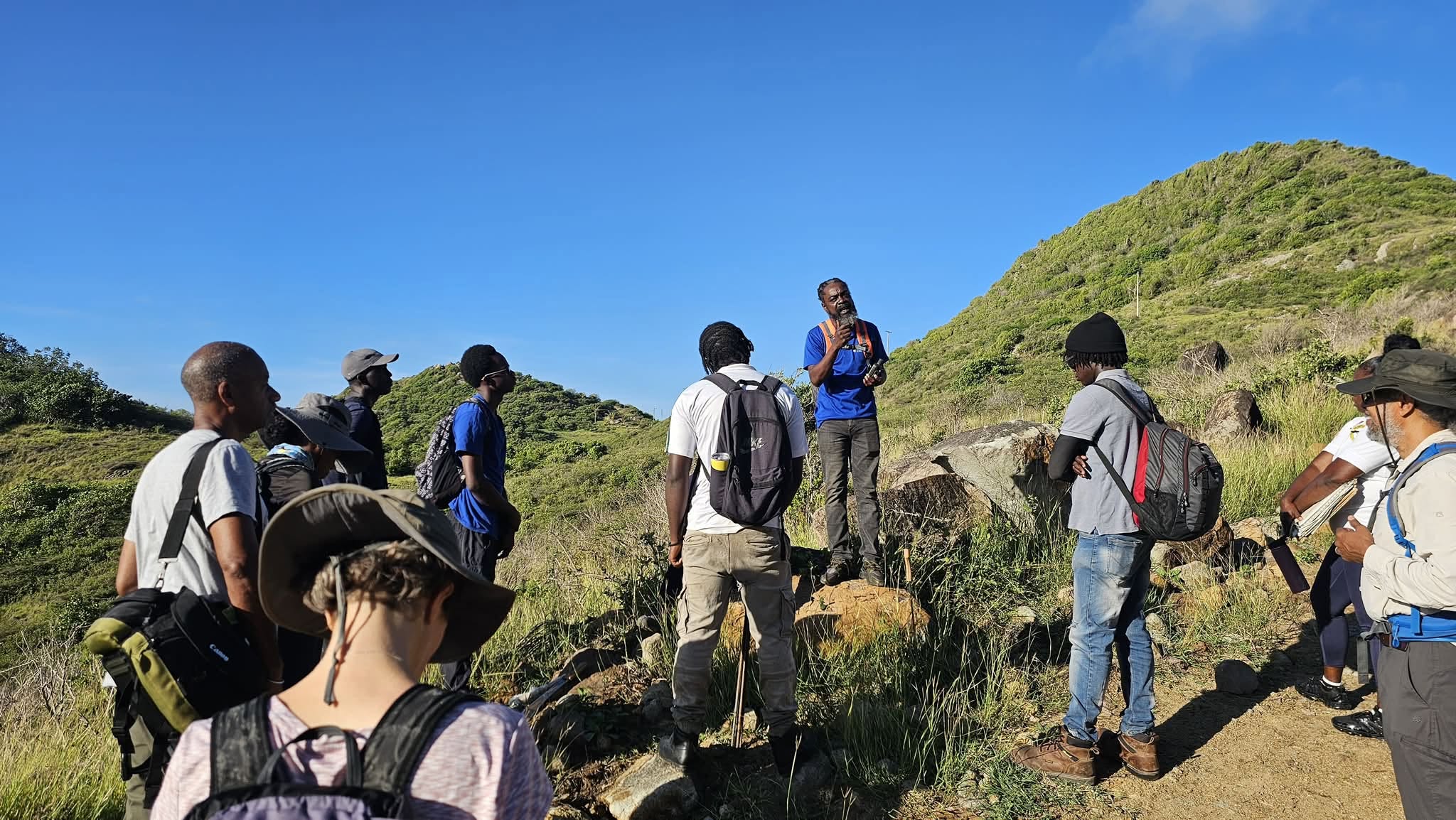
BRADES, MONTSERRAT – A three-year project aimed at improving forest management, protecting water resources and developing sustainable livelihood opportunities was officially launched in Montserrat on October 20, bringing together local, regional and international partners to strengthen the island’s resilience to climate change.
The Thriving Ecosystems and Communities in Montserrat: Agroforestry and Sustainable Land Management Solutions project is being implemented through a partnership involving the Montserrat National Trust, the Department of Environment, the Royal Society for the Protection of Birds (RSPB), the Caribbean Natural Resources Institute (CANARI), Maya Blue Consultants and researchers from the universities of Cambridge and Edinburgh.
It is funded by the UK Government’s Global Centre on Biodiversity for Climate (GCBC), through the Department for Environment, Food and Rural Affairs (DEFRA).
The project focuses on four connected areas: water security, forests and biodiversity, climate information, and climate-smart agriculture and sustainable livelihoods.
Speaking at the launch, Minister of Agriculture, Lands, Housing, Environment, Youth Affairs and Sports John Osborne described the project as an important investment in both environmental protection and national development.
He said protecting and restoring nature should not be viewed as separate from development, noting that forests and watersheds support the island’s water supply, agriculture, tourism, culture and quality of life.
Osborne highlighted the importance of understanding Montserrat’s natural resources and using reliable information to guide decisions on their protection and sustainable use.
He also pointed to opportunities to expand forest-based livelihoods, including the potential for bay leaf production and renewed interest in producing bay rum. The Ministry is also exploring the use of areas within the exclusion zone for an orchard project focused on avocados, breadfruit and coconuts.
The Minister said the project’s emphasis on developing local skills was particularly important, as the knowledge and expertise gained should remain in Montserrat beyond the three-year funding period.
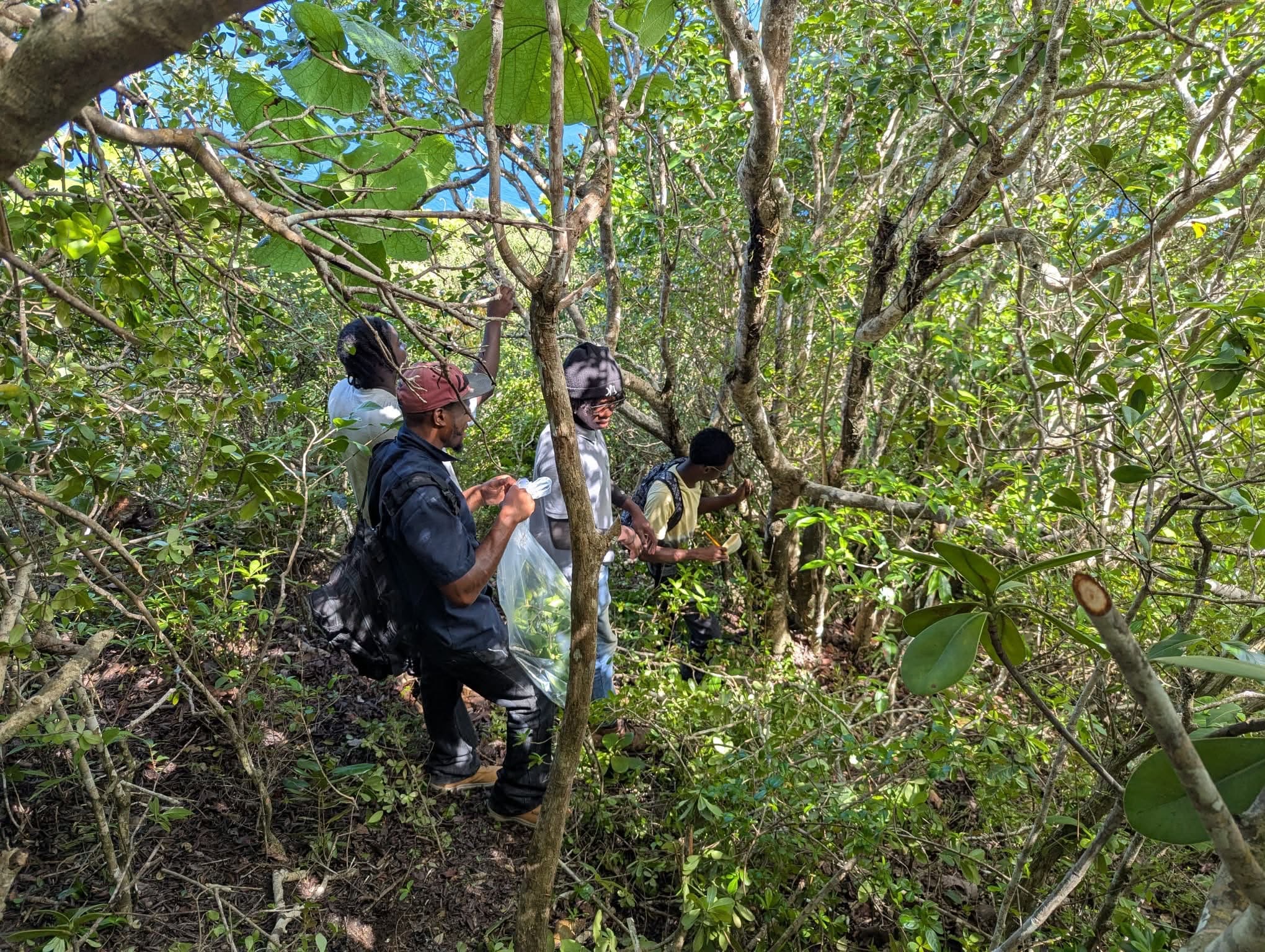
First national forest inventory for a Caribbean UK Overseas Territory
A major component of the project will be the development of Montserrat’s first National Forest Inventory, providing a detailed picture of the island’s forest resources.
Dr Howard Nelson, affiliate lecturer in conservation leadership at the University of Cambridge, is leading this component. He explained that the inventory will establish baseline information on forest health, structure, tree species, signs of disturbance and the condition of different forest types.
The information will help government and conservation organisations understand what resources exist, where protection or restoration may be needed, and how forests are responding to environmental changes.
Nelson said the inventory was intended to be an ongoing process rather than a one-off exercise. Repeated surveys would allow Montserrat to monitor changes over time, including forest recovery, the spread of invasive species and the condition of important tree populations.
The project will also use satellite information, remote sensing and artificial intelligence to improve data collection and reduce the amount of fieldwork required over time.
A digital system developed by the United Nations Food and Agriculture Organization, known as Open Foris, will be used to support data collection and management. Field teams will be able to enter information through a mobile application, making it available to the Department of Environment and the Montserrat National Trust.
Nelson said training local personnel was central to the work. Training activities had already begun, with 15 people, most of them young people, participating in initial sessions on forest inventory and climate research.
He noted that the project also creates an opportunity for regional collaboration, with forestry expertise being shared with colleagues from St Lucia, where a national forest inventory is already underway.
Local climate data to improve planning
The climate research component is being led by Dr Ellie Devinesh Nelson, lecturer in conservation and co-director of the Biodiversity, Wildlife and Ecosystem Health Master’s Programme at the University of Edinburgh.
She explained that climate change is expected to bring further challenges for Montserrat, including drying conditions, extreme heat, rising sea levels and more intense rainfall events, with associated risks of flooding and landslides.
A key difficulty for small islands is the lack of sufficiently detailed climate information. Regional and global climate models often fail to capture the differences in conditions across an island’s varied terrain.
The project will therefore collect more detailed local information using 14 data loggers to measure temperature and humidity in different microclimate habitats. A weather station will also be installed in the Centre Hills to measure precipitation and solar radiation.
The information will help researchers assess how climate conditions may affect forests, tree species and agricultural livelihoods. It will also support decisions about which species may be suitable for planting in particular locations as conditions change.
Dr Nelson said the research would examine how the habitats of selected tree species could shift as temperatures and rainfall patterns change, helping Montserrat plan for more climate-resilient forestry and agriculture.
Protecting water resources
The project’s water security component will assess Montserrat’s springs, boreholes and aquifers, examining water supply, demand and quality.
The work will identify vulnerable spring sites, assess potential impacts from changing land use and determine which watersheds should be prioritised for protection.
The findings will inform the development of hydrological protection zones and a sustainable water resource management plan.
Osborne noted that Montserrat currently has an abundant supply of spring water, but said this should not lead to complacency. Changes in the island’s geology have already affected some springs, reinforcing the need for long-term monitoring and sustainable management.
The water research is being undertaken by Maya Blue Consultants, led by Elizabeth Manning-Smith, with support from CANARI.
New opportunities for sustainable livelihoods
The fourth component will examine how agroforestry and non-timber forest products could create new economic opportunities for Montserrat.
These may include traditional plants, medicinal species, leaves, flowers, vines and other forest resources that can be used without harvesting timber.
CANARI will lead the participatory work, engaging farmers, community groups and other stakeholders to identify products with potential and assess what would be required to develop viable enterprises and bring them to market.
The project will also support the establishment of a climate-smart agriculture pilot area and an agroforestry nursery, with guidance tailored to Montserrat’s conditions.
RSPB Caribbean Overseas Territories Officer Lyndon John said the aim was to connect research with practical action, ensuring that the information gathered would help strengthen livelihoods as well as protect biodiversity.
He noted that the project could explore opportunities such as bay leaf and barum production, traditional medicinal plants and other forest-based products, depending on stakeholder interest and the results of the assessments.
Exclusion zone and biodiversity research
During the question-and-answer session, participants raised the importance of including the exclusion zone in the forest inventory, given the significant environmental changes that have taken place since the volcanic eruptions.
Governor Harriet Cross said access for scientists and ecologists would be encouraged, provided guidance from the Montserrat Volcano Observatory and the Disaster Management Coordination Agency was followed.
Researchers also discussed the need to account for volcanic impacts, including ash deposits and sulphur dioxide emissions, when assessing forest health and modelling future climate conditions.
The project will include biodiversity assessments, with field teams expected to record information on birds, amphibians and reptiles at survey locations. The data could also support other conservation initiatives, including ongoing work involving Montserrat’s endemic species.
Questions were also raised about whether the project could generate financial returns through carbon credits. Researchers cautioned that Montserrat’s small land area would limit the potential scale of carbon-credit income. They suggested that the value of forests should instead be considered through a wider range of ecosystem services, including water security, tourism, recreation and sustainable forest-based enterprises.
The project is one of 12 initiatives funded under the third round of the Global Centre on Biodiversity for Climate programme. Its three-year implementation period will involve research, field surveys, training and the development of recommendations to guide future management of Montserrat’s natural resources.
The launch brought together government representatives, conservation organisations, technical experts and community stakeholders, with partners emphasising that the project’s long-term success will depend on local participation and the development of skills that remain on the island.
Discover more from Discover Montserrat
Subscribe to get the latest posts sent to your email.