

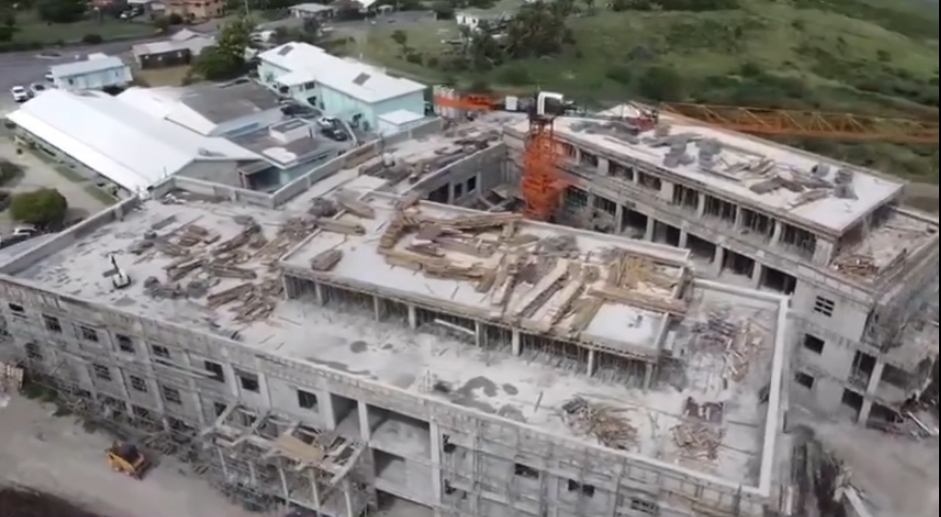
BRADES, MONTSERRAT – Construction of Montserrat’s new national hospital is progressing, with the concrete structure completed and internal finishing works advancing across its three wings. The facility is now expected to be handed over in phases, with the process targeted for completion by mid-2027.
The update was provided during a special ZJB Radio discussion on Thursday, November 26, featuring Minister of Health Dr Ingrid Buffonge, Acting Permanent Secretary in the Ministry of Health and Social Services Viona Alexander-Smith, hospital project manager Carlos Pena and Health Services Transformation project manager Mary Miller-Salah.
The programme, the first in a planned series of public education discussions on the hospital project, addressed construction progress, procurement, staffing, digital health services and the preparations required before patients can safely use the new facility.
Construction progress and procurement
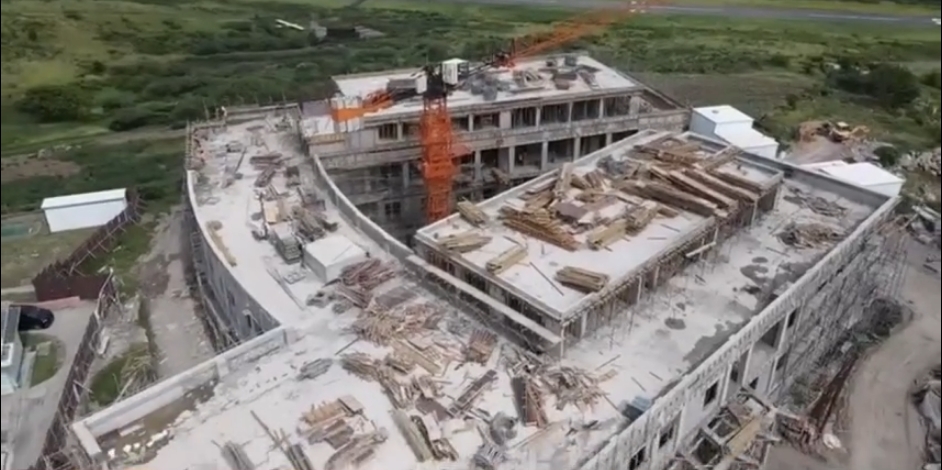
Pena reported that the concrete structure of the hospital had been completed, with finishing works now underway across the west, central and east wings.
Blockwork was approximately 95 per cent complete, while internal plastering had reached about 85 per cent. Electrical installation was 45 per cent complete, plumbing 75 per cent and heating, ventilation and air conditioning (HVAC) installation 10 per cent complete.
He said major equipment and materials required for the project, including the two elevators and air-conditioning units, were already on the island, on their way or awaiting shipment.
However, the project had experienced supply-chain delays, including 11 containers stranded in St Maarten for almost four weeks. Pena confirmed that the issue had been resolved, with nine containers already delivered to Montserrat and two still outstanding.
He described the overall progress as good, despite the challenges associated with transporting materials to a remote island, and said the team was working towards delivering the facility on time.
The hospital is part of a wider complex that has been developed in stages, beginning with renovations to the former Glendon Hospital facilities and the construction of supporting buildings.
Handover will not mean immediate opening
A key message from the discussion was the need to distinguish between construction handover, staff occupancy and the safe admission of patients.
Pena explained that the hospital would not be handed over as one complete facility on a single day. Instead, the three wings and their departments would be delivered in stages, with the handover process expected to conclude by mid-2027.
Alexander-Smith emphasised that the handover of the physical building was separate from the process of occupying it and opening services to patients. She said this was important in managing public expectations, particularly as some people had anticipated that the hospital would open in April.
Miller-Salah explained that each department would require its own transition plan, including moving equipment, training staff and testing how services would operate within the new building.
Some departments have fewer operational dependencies than others. The emergency department, for example, relies on services such as laboratory testing, pharmacy, radiology and, where necessary, surgical support.
The transition will also involve moving from a hospital service spread across several buildings to a facility where most departments operate under one roof. Staff will need to become familiar with new spaces, patient rooms, equipment and workflows.
The Ministry stressed that existing healthcare services must continue throughout the transition. The aim is to minimise disruption while ensuring that patients are only moved into areas that are fully prepared to provide safe care.
Staffing requirements under review
Staffing was identified as one of the major considerations for bringing the new hospital into operation.
Alexander-Smith said the Ministry of Health had initially sought more than 80 additional positions to support the larger facility and the level of service required, including 24-hour operations.
However, after reviewing the options and considering the wider government budget, the current request is for approximately 46 to 48 new positions.
She explained that this would represent the first phase of recruitment, with further staffing increases required over the following two to three years to reach the Ministry’s preferred level.
The new hospital will have additional functions, including a central sterilising services department, and will require more auxiliary staff to support cleaning, infection prevention and other operational needs.
Miller-Salah noted that staffing levels would directly affect when departments could safely receive patients. The Ministry’s priority, she said, was to ensure that staff were available to provide the expected standard of clinical and operational care.
Digital health services and medical equipment
Preparations for the new hospital extend beyond the building and its equipment. The Ministry has also been working on a health information technology system intended to support a more digitally enabled healthcare service.
Miller-Salah said the facility had been designed to operate with a health information system, alongside modernised diagnostic services in the radiology department.
The system is expected to support more efficient administration, quicker access to information and improved coordination of patient care.
A patient portal is also planned, giving members of the public access to their health information. Miller-Salah said public education and support would be provided before the portal becomes available, with the latter part of 2027 identified as the likely period for its introduction.
She added that the primary healthcare centres are already using the health information system, while preparations are continuing to bring the hospital departments online together.
The procurement of medical equipment began several years ago and is now in its final stages. Equipment will be installed and brought into operation in line with the phased handover of the hospital.
Maintenance costs will increase
The size and technical requirements of the new facility will also bring higher maintenance and operating costs.
Alexander-Smith confirmed that the Ministry had submitted supporting proposals to the relevant government authorities for an increase in the recurrent budget to cover the additional costs.
Among the considerations are more than 200 air-conditioning units to be installed throughout the facility, as well as the maintenance of medical equipment, software, networks and other infrastructure.
Miller-Salah explained that some equipment, including the CT scanner, mammography machine and new X-ray equipment, already has maintenance arrangements supported by government. However, the building itself and its wider utility systems will require additional ongoing investment.
Local employment and construction workforce
The discussion also addressed the use of local labour on the project.
Pena said the project began with an approximate 50:50 split between local and overseas workers. As construction progressed and specialist trades such as electrical installation, plumbing and air conditioning became necessary, the balance shifted towards foreign workers.
He estimated that the current workforce was approximately 70 to 75 per cent foreign and 25 to 30 per cent local, although the figures could vary.
Minister of Health Dr Ingrid Buffonge acknowledged concerns about pay rates and the availability of local skilled workers, noting that accommodation and food arrangements provided to overseas workers formed part of the employment considerations. She said there was no barrier preventing local workers from seeking employment on the site.
Alexander-Smith confirmed that the contractor continued to comply with Montserrat’s minimum wage requirements.
Public engagement and next steps
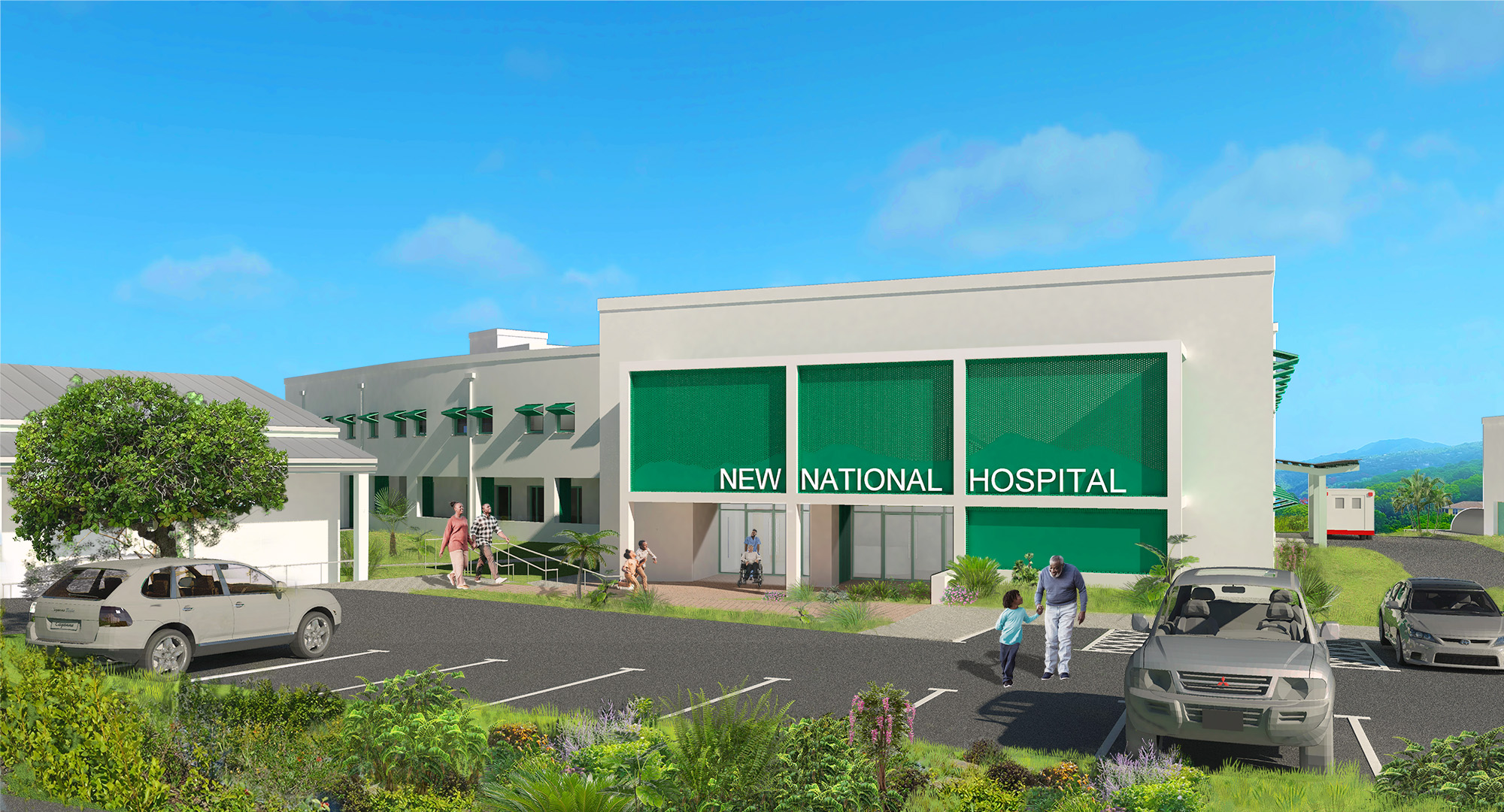
Dr Buffonge said the new hospital represented a significant milestone after three decades of healthcare services operating in temporary facilities following the volcanic crisis.
She paid tribute to healthcare workers who had maintained services during that period, including nurses who had spent much of their careers working within the makeshift hospital arrangements.
The minister also encouraged the public to remain patient as the transition takes place, stressing that the priority was to establish a safe and properly staffed environment before patients are moved into the new facility.
Plans are being considered to arrange supervised visits to the hospital compound for students, particularly those studying construction at Montserrat Secondary School. The Minister suggested January as a possible period for such a visit, subject to a formal request being submitted to the Ministry.
The Ministry said the public would continue to receive updates through further discussions and engagement as the project progresses. It also encouraged residents to provide feedback through the community liaison mechanism established earlier this year.
The new national hospital project is being delivered with support from the UK Government through the Foreign, Commonwealth and Development Office (FCDO), under the SIPREC programme. The Minister also acknowledged the work of the construction company, CIE, and the design company, Article 25, alongside the Ministry’s staff and project teams.
The Ministry reiterated that the building’s completion is only one part of delivering a functioning hospital. Staffing, equipment, maintenance, digital systems and the safe transition of services must all come together before the facility can fully serve the people of Montserrat.
Discover more from Discover Montserrat
Subscribe to get the latest posts sent to your email.