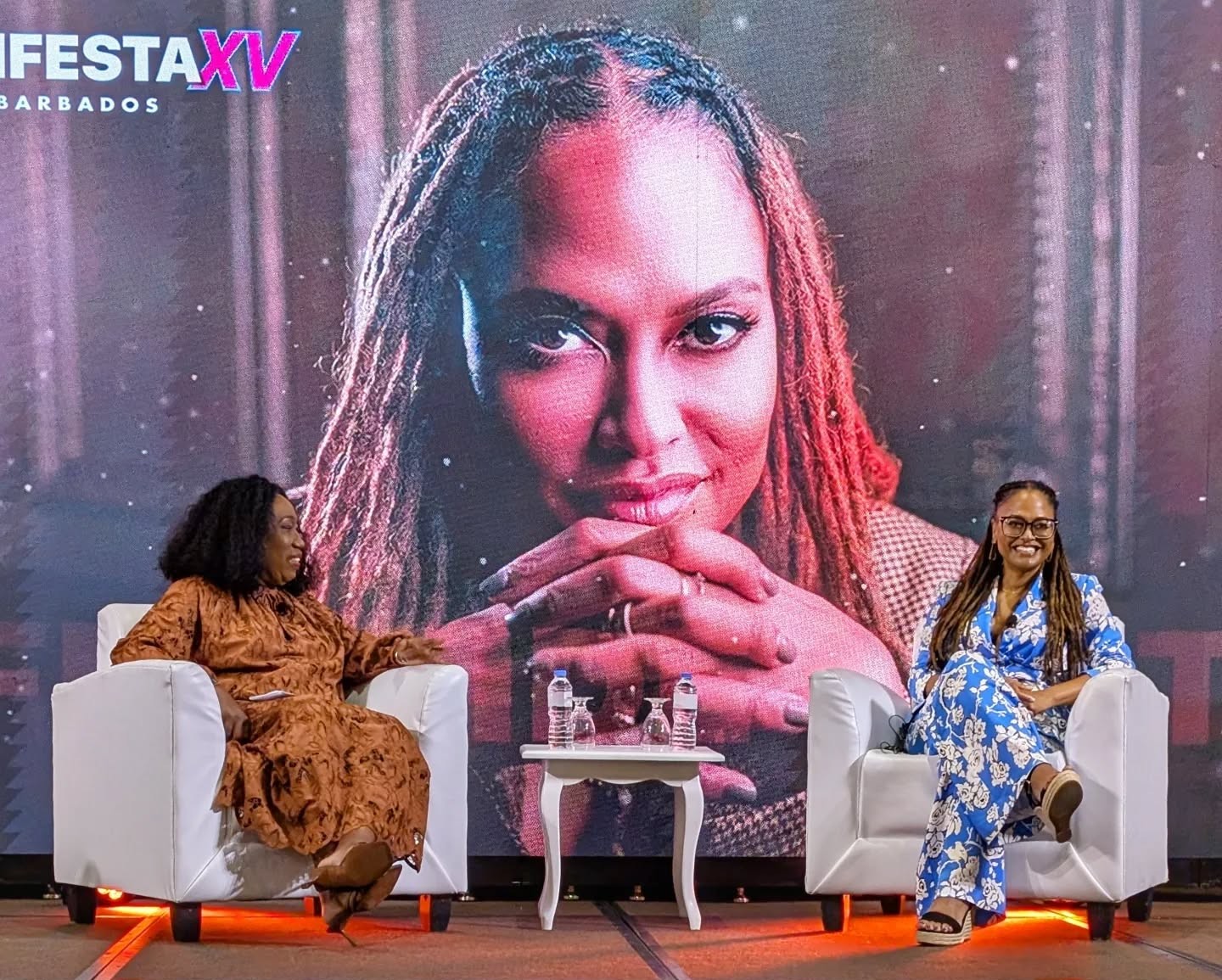
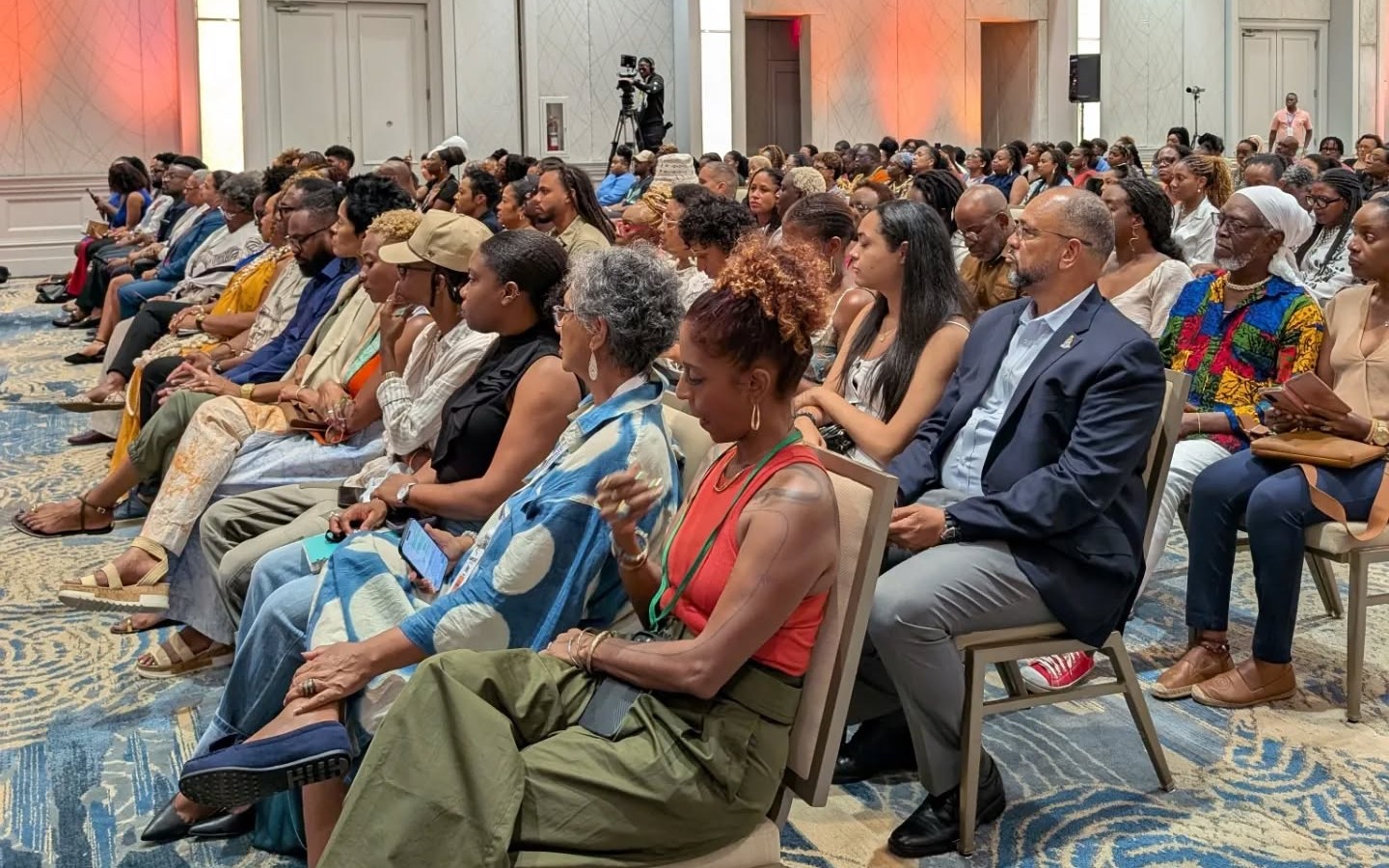
The air inside the packed hall at the Hilton Barbados in Bridgetown was charged with anticipation on Monday night as festival director Carol Roberts-Reifer welcomed Academy Award nominee and Emmy, BAFTA, Peabody and Sundance-winning filmmaker Ava DuVernay to the stage for a fireside chat. It was one of the marquee events of CARIFESTA XV, the Caribbean’s largest celebration of arts and culture, and the audience of artists, government leaders, and film enthusiasts settled in for a conversation that proved both deeply personal and globally resonant.
“I didn’t pick up a camera until I was 32 years old,” DuVernay confessed early in the exchange. “In the United States that’s very, very old to start making films. Most kids start in high school or go to film school. I didn’t. I was just a person who liked movies.”
That late start has since propelled her into history. From Selma, the first film by a Black woman director nominated for Best Picture at the Oscars, to 13th, to the global success of When They See Us and her latest feature Origin, DuVernay has become one of the most influential voices in contemporary cinema. Yet her story, as she reminded the audience, began in South Central Los Angeles, working publicity jobs on Hollywood sets before deciding that she too could tell stories with a camera.
“I believe whenever you have a desire or want that is positive, it is God-given,” she explained. “In the same way my sister can do hair like nobody’s business, I was called to tell stories, even though I had another job, another career, another life, and even though I was older than most. I just leaned into it.”
Finding Her Way Into Film
The conversation, moderated by Roberts-Reifer, traced DuVernay’s unconventional path into filmmaking. She recalled being on the set of Collateral in her own neighbourhood of Compton and suddenly realising that the stories unfolding around her belonged on screen. From tinkering on weekends, she moved toward short films, gradually learning the craft without a formal mentor but through what she calls a “village of people” who encouraged her at different stages.
By the time Selma came to her, she was ready. “There were seven directors before me,” she said. “When David Oyelowo, who was cast as Dr. King, fought to keep the role, he brought me in. And I said, ‘This is my story. No one else can tell it like me.’”
Asked whether the weight of telling such a pivotal civil rights story felt overwhelming, she shook her head. “I never thought it was bigger than me. I don’t put myself in the films. I am a servant to the story. Yes, the stories are bigger than me, but I’m just the vessel.”
Justice and Dignity as Story
A recurring theme throughout the evening was DuVernay’s insistence that films about justice and dignity are not “niche” or medicinal but deeply engaging. “I think justice and dignity is sexy,” she said to loud applause. “It’s provocative. It’s adventurous. Around the world, people want to talk to me about their neighbourhood, their family, their community. These things connect us beyond race, age, or gender. No matter what they tell us, it is more than okay to care.”
Even when dealing with painful histories, DuVernay said her films strive toward triumph. “It’s my pain point when people say my films are too hard. What’s really hard is two hours of John Wick killing people for no reason. I show selective violence that illustrates a larger story. And by the end, I want you to feel triumphant, that people survived, resisted, overcame.”
A Black Woman’s Lens
DuVernay did not shy away from discussing the importance of perspective. “Of course my lens as a Black woman is different. I come with the full weight of my history, my people, my family, my street. And I think it’s beautiful that we all bring our specificity. I don’t want to dumb down into a vanilla space. The spice of life is in the difference.”
Her call to young Caribbean filmmakers was clear: build community, tell the stories that set you on fire, and refuse to wait for permission. “The best story is the story you want to tell, that you would do even if no one paid you,” she urged. “People can tell when something was loved into existence. You don’t need to know all the steps, you just need to get up and begin.”
Building Array and Global Connections
DuVernay spoke passionately about her company Array, which she calls her “liberated territory.” With funds from earlier projects, she purchased buildings in Los Angeles to establish a studio, a free community cinema, and initiatives such as Array Crew, a database connecting productions with diverse crew members.
But her sights are increasingly global. “We’re all vibrant and independent in different places, Barbados, Nigeria, Brazil, the U.S., but we’re disconnected. Once we build real global connection among filmmakers, we can create dynamic art for the people, outside of corporate interests.”
Discovering Caribbean Roots
One of the most poignant moments came when DuVernay described tracing her ancestry on the PBS series Finding Your Roots. “I had no awareness of my Caribbean roots growing up,” she said. “It wasn’t until Dr. Gates told me I had Haitian ancestry that I knew. It’s sad we don’t have that knowledge. That was purposeful, systematic. But now many African Americans are on that quest to reconnect.”
That personal discovery, she said, has fuelled her commitment to thinking beyond U.S. borders in her filmmaking and activism.
Awards and Activism
When asked how she feels hearing the long list of “firsts” attached to her biography, DuVernay was candid. “It’s bittersweet. Those firsts are an indictment of the American film industry. I am not the best or the only, there were extraordinary women decades before me who were simply not given the opportunity. I may be the first, but definitely not the last.”
Her relationship with awards has shifted. “Early on, being an Oscar nominee mattered. It opened doors. But now I see it for what it is, a room full of people trying to get a statue so they can make their next film. It’s transactional. It doesn’t define my love for the work.”
On AI, Climate Change, and New Frontiers
The discussion also turned to emerging issues like artificial intelligence. “It’s here. We can’t fight it. The question is, are we going to be on the sidelines complaining or are we going to get on the train and bend it in our direction? AI cannot duplicate you. Use the tools, bring your history, your ethics, your creativity to it.”
On global challenges such as climate change, she argued that artists must find ways to tell urgent stories without making them feel like “medicine films.” “We have to wrap the medicine in candy. Adventure, romance, mystery, whatever draws people in, and then embed the message.”
Audience Questions
In the lively Q&A session that followed, DuVernay fielded questions from filmmakers, musicians, and even a makeup artist who asked how beauty contributes to storytelling.
One audience member asked about her use of music, referencing 13th and the haunting choice of “Moon River” in When They See Us. DuVernay smiled warmly: “That’s one of the most detailed, beautiful questions I’ve ever been asked. Music is like painting—you find the song, sometimes it finds you. And when it’s right, it elevates the story.”
Another filmmaker from the Cayman Islands described struggling to finance a hurricane thriller. DuVernay urged her to scale down if necessary. “If you’ve got half the money, shoot. Don’t wait. The American film industry is collapsing, independence is the future. Sometimes you have to get off the stage even if you don’t know all the steps.”
A radio host from Los Angeles marvelled at crossing paths with DuVernay in Barbados. She revealed she is currently at work on a new documentary, though details remain under wraps.
Perhaps the most memorable advice came when a young filmmaker confessed feeling stuck between having a story but no resources, or resources but no story. DuVernay’s response drew applause: “You don’t need to know all the steps. There are nine ways to cross the room. Everyone has a camera now, even an iPhone can make a feature film. Just stand up and begin.”
Culture as Transformation
As the evening closed, Roberts-Reifer reflected on CARIFESTA’s commitment to “big conversations” beyond politics and scholarship. DuVernay agreed wholeheartedly: “Narrative change is powerful. Even scientists are realising they need storytellers to connect their work to people. If you can tell a story, you can transform, inspire, motivate. Nothing does that like the arts and culture.”
Her final words were simple but resonant: “Make the work with all your heart. Don’t wait for permission. And remember, film is not just about entertainment. It’s about justice, dignity, and connection.”
As the audience rose in a standing ovation, the message was clear. In Ava DuVernay’s world, storytelling is more than craft. It is survival, resistance, and above all, a call to care.
Discover more from Discover Montserrat
Subscribe to get the latest posts sent to your email.