
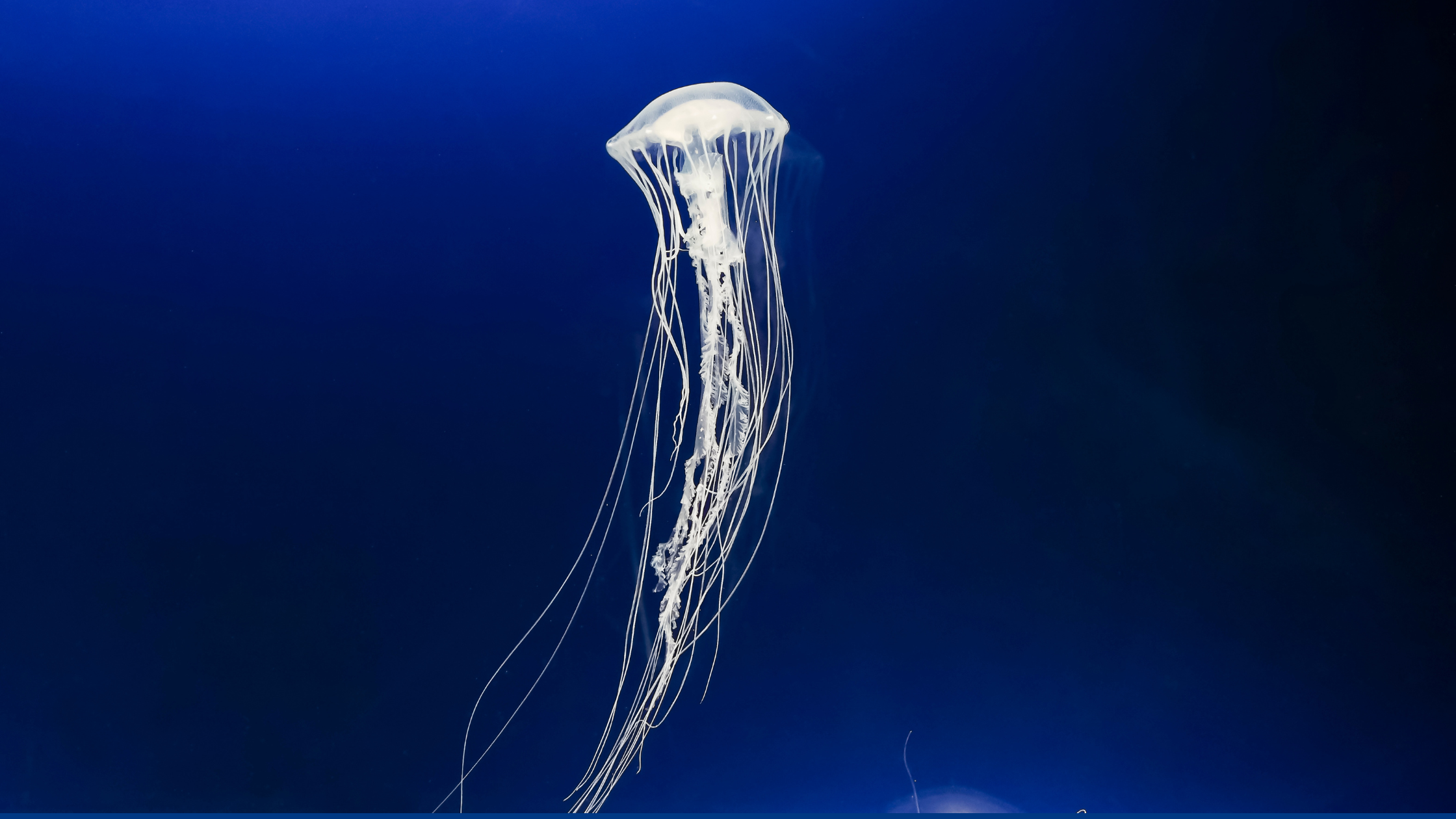
The Disaster Management Coordination Agency (DMCA) has issued a Jellyfish Season Advisory for Montserrat waters following confirmed sightings of the Caribbean Box Jellyfish and reports of stings affecting beachgoers. As the island’s waters continue to warm, encounters with jellyfish are becoming more common.
While most stings are not considered life-threatening, the DMCA is urging residents and visitors to exercise caution when entering the sea and to come prepared. The Caribbean Box Jellyfish, though generally not aggressive, can deliver painful stings that cause discomfort or allergic reactions in some individuals.
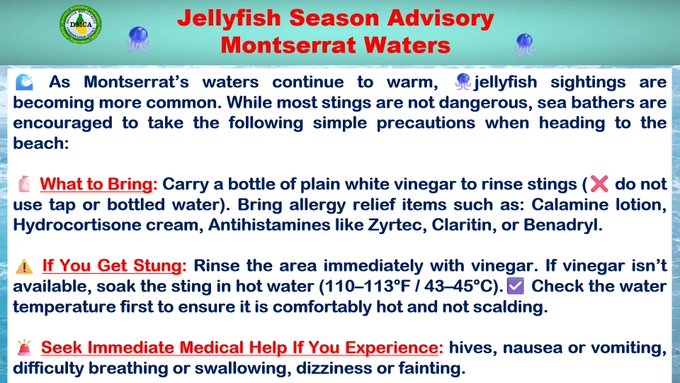
Precautions for Seabathers:
What to Bring: Pack a bottle of plain white vinegar to rinse any potential stings — do not use tap or bottled water. It is also recommended to bring allergy relief items such as calamine lotion, hydrocortisone cream, and antihistamines like Zyrtec, Claritin, or Benadryl.
If You Get Stung: Rinse the affected area immediately with vinegar. If vinegar is not available, soak the area in hot water (110–113°F or 43–45°C). Be sure to test the water temperature first to avoid burns.
Seek Immediate Medical Attention if you experience any of the following symptoms:
Hives
Nausea or vomiting
Difficulty breathing or swallowing
Dizziness or fainting
The DMCA advises all beachgoers to remain vigilant during this period and to report any jellyfish encounters to local authorities. Public safety remains a priority as Montserrat heads into the peak of its marine activity season.
Stay informed by following updates from the DMCA and taking appropriate safety measures when enjoying the island’s beautiful coastline.
Discover more from Discover Montserrat
Subscribe to get the latest posts sent to your email.