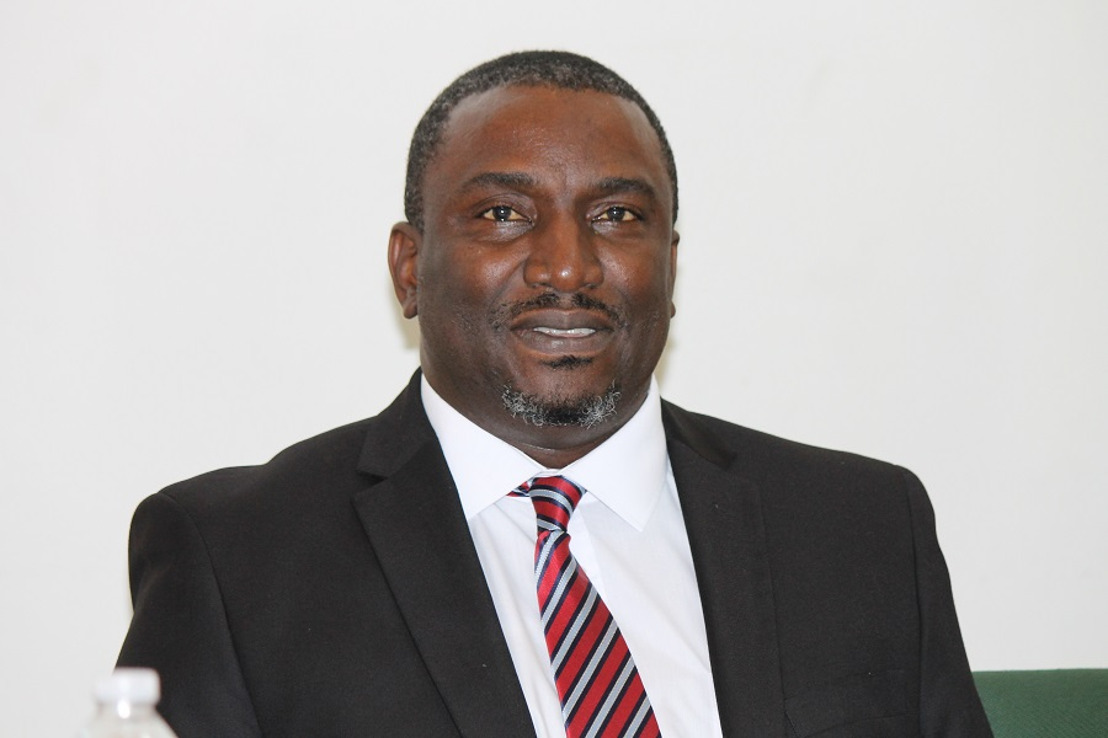
The recent plight of Montserrat’s Landis “Shorty” Baker and Cherry Brown, both struggling to access urgent overseas medical care, has again exposed what Opposition MLA and former Premier Donaldson Romeo calls “a systemic and deadly double standard” in how the United Kingdom treats its citizens from the British Overseas Territories (BOTs).
Their stories, now joined by that of a British-born toddler from Anguilla being denied a passport and free NHS care, underline what Romeo says is the UK’s continued failure to uphold its legal and moral duty to its own citizens, more than 70 years after the Windrush generation was invited to Britain.
A Pattern of Neglect Spanning More Than a Decade
For Romeo, this is not new. In 2012, he wrote to the UK Foreign Office pleading for emergency help for 33-year-old George Allen, a Montserratian and British national who had been shot in the head and was hospitalised in Trinidad. Despite his urgent appeals to then Minister Henry Bellingham for a medical evacuation to the UK, no help came. Allen died days later.
In the UK’s official response which came days after Allen’s death, the Foreign Office expressed condolences but stated that the Government of Montserrat was responsible for healthcare on the island and that the UK could not fund medical transfers for British nationals hospitalised overseas.
Romeo’s follow-up letter, written after Allen’s death, accused the UK of moral negligence and warned that Montserrat’s fragile health system made such tragedies inevitable. “What has happened to Mr. Allen could happen to anyone living on Montserrat,” he wrote then, words that remain painfully relevant in 2025.
During his tenure as Premier, Romeo also documented the case of Thomas Silcott, a 73-year-old Montserratian who held full British citizenship. Silcott travelled to London for life-saving dialysis but was denied welfare support, discharged from hospital prematurely, and deported while still ill. He arrived in Antigua “distressed and soaked in urine,” according to Romeo, and died not long after returning to the UK for treatment.
“The case of Mr. Silcott proves that even those of us with full British citizenship are not protected,” Romeo said this week. “You can hold the passport, you can pay taxes, but if you come from a territory like Montserrat and lack proof of full UK citizenship, you are still treated as an outsider. That makes every Montserratian vulnerable, with full British citizenship by birth and parentage or with citizenship by naturalisation and whether they are in the Montserrat or the UK, Antigua, in Trinidad or Jamaica, whether they are dual citizens in their homeland or not.”
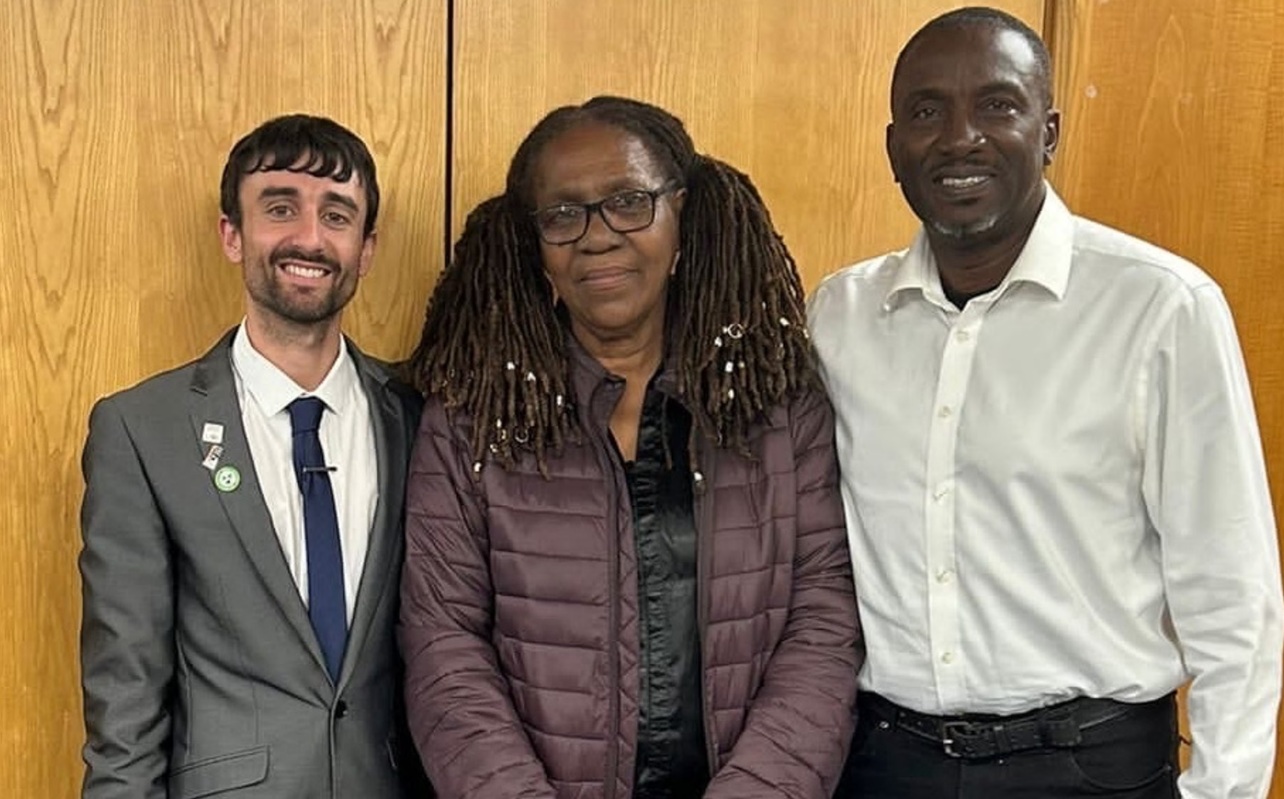
The Modern Parallels: Baker and Brown
In recent weeks, Romeo has renewed his calls for action in letters to UK and Montserrat officials on behalf of Landis “Shorty” Baker, a beloved calypsonian and mechanic who is now oxygen-dependent in a Jamaican hospital after spending his life savings on care. His family has offered to house him in the UK, but the British government has yet to respond to multiple appeals for medical evacuation. Baker’s doctor had previously approved his travel to the UK as a regular passenger but now weaker and on oxygen, he will need special medical air evacuation, Romeo explained.
Earlier this year, 69-year-old Cherry Brown, who travelled to the UK for surgery under a Montserrat government referral, was denied free NHS care and forced to sleep rough in Kent before local officials intervened. Her case drew international coverage in The Guardian and on BBC TV.
“These are not isolated events, they are the result of a system that was designed to fail us,” Romeo said. “The UK cannot continue to abandon us when our people are sick or dying.”
The Opposition member said he is committed to representing Montserratians who find themselves in this situation.
“UK’s MP Hon Dickson, of Dartford, London where Cherry now resides, is representing and standing up for Cherry. Hon Rosindell, of Romford, London has volunteered to represent Mr. Baker in Jamaica. Both Cherry and Mr. Baker are my constituents. They reached out to me for help and I am paid to represent them,” Romeo told Discover Montserrat. “If there’s nobody else on Montserrat standing up for them and pointing out that the UK is in breach of their legal and moral obligation, that there are serious policy gaps, and that Cherry and Baker at least deserve the full humanitarian care given to asylum seekers in the UK, how could I not do my best to help, especially when all Montserratians stand to benefit since we all can face the same plight one day?”
A Wider Problem Across the Overseas Territories
A new Guardian investigation published on 10 October 2025 revealed that the problem extends beyond Montserrat. In the UK, a three-year-old girl, Zharia-Rae, born to a mother from Anguilla, has been denied a British passport and asked to prove her right to NHS treatment, despite being born in Birmingham and having a British citizen sibling.
Her mother, Tracy Ann Dunkley, described the experience as “scary and humiliating,” saying she had received letters demanding proof of entitlement for her daughter’s medical care. The case, campaigners say, shows that the UK has not learned the lessons of the Windrush scandal.
“It’s striking that if Zharia had been born in Anguilla, she would automatically be a British citizen, yet being born in the UK disqualifies her,” said Windrush activist Euen Herbert-Small told The Guardian. “This exposes the absurdity of British nationality laws and the urgent need for reform.”
Romeo said this case reinforces what Caribbean citizens have long known: “There are two classes of British citizens. Whether you are born in the territories or migrate to the UK, your rights depend on how much the system decides you’re worth and varies from day to day and case to case.”
Montserrat’s Health Reality
Montserrat’s health challenges are stark. Nearly 30 years after the Soufrière Hills eruption destroyed the island’s capital and hospital, Montserrat remains 60% dependent on the UK for its recurrent budget and has no specialist medical services of any kind. Residents must travel overseas, often to Antigua, Jamaica, or the UK, for dialysis, chemotherapy, advanced cardiac care, various surgeries and even dental care, ophthalmology and a lot more.
The island faces a growing crisis of non-communicable diseases (NCDs), including diabetes, hypertension, and heart disease. According to 2023 Ministry of Health data, NCDs now account for over 70% of deaths on island. An ageing population, limited diagnostic services, and the lack of a functioning hospital compound the cost and risk to patients and their families.
Only a few BOTs, including Montserrat, Anguilla, the BVI, Turks and Caicos, and St. Helena, are eligible to send patients to the UK under the NHS Quota System, which allows only 10 referrals each year for treatment free of charge. But that programme, Romeo says, is “wholly inadequate for the scale of Montserrat’s needs” and burdened by rigid eligibility rules that exclude those without UK residence or family support.
Meanwhile, other territories, such as Gibraltar, the Falklands, and the Crown Dependencies of Jersey, Guernsey, and the Isle of Man, enjoy automatic access to NHS care through special UK arrangements.
“Montserrat has none of those privileges,” Romeo said. “Lacking substantial investment needed to replace key infrastructure like the only Hospital since the volcano erupted 30 years ago, we are one of the most dependent territories on the UK, yet we are denied the same healthcare access as others who rely on them far less.”
“A Continuing Windrush”
Romeo argues that these repeated failures, from George Allen in 2012 to Thomas Silcott, Cherry Brown, and now Landis Baker, represent a continuation of the injustices that defined the Windrush scandal.
“It is clear that UK policy toward British Overseas Territory and Caribbean citizens often falls short of compliance with both UK and international human rights law,” Romeo said. “Despite the shame of the Windrush scandal, little meaningful reform has taken place.
Until that changes, Montserratians and others from the territories will remain second-class citizens in the eyes of the very country whose passport they hold.”
He is now calling for legal action to compel reform, saying it is time for polite diplomacy to have strong legal footing. “We’ve written letters, we’ve pleaded, we’ve buried our dead,” he said. “If Britain will not act out of decency, then justice must be demanded through the courts.”
Discover more from Discover Montserrat
Subscribe to get the latest posts sent to your email.